VanLife · Campervan Amsterdam · Complete guide
The Ultimate VanLife Guide:
Amsterdam & Beyond
The Netherlands has more to offer than Amsterdam. Rent a campervan in Amsterdam and chase tulip fields, fishing villages, wild islands, river valleys and ancient forests, all reachable in a day from Amstelveen. This is the complete vanlife guide to the Netherlands: where to go, how to park legally, and why hiring a campervan beats a hotel every time.
Adelaar Campers · April 2026 · 14 min read
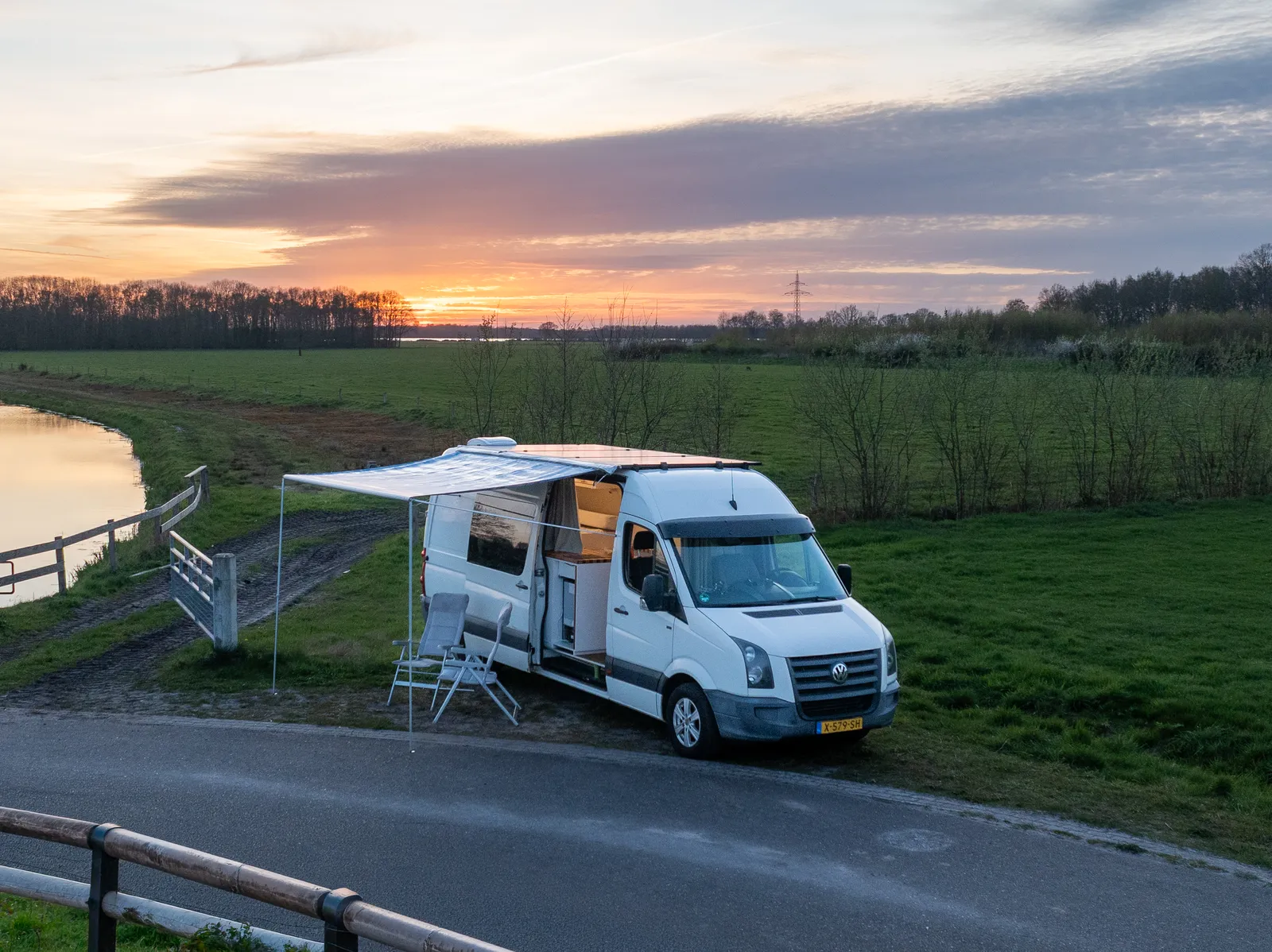
Noord-Holland · on the road
Know the rules:
where you can and can't park
Let's start with the honest version. Wildcamping setting up camp outside a designated site is not permitted in the Netherlands. That includes sleeping in a campervan on a public road or car park if it's clearly used as overnight accommodation. Local municipalities take it seriously, especially in tourist-heavy areas and national parks.
The good news: there are excellent legal alternatives, and the Netherlands is well set up for campervan travellers who know where to look.
Official campings in and around Amsterdam
Camping Zeeburg
Amsterdam · city
Amsterdam's most central campsite, located between the city centre and IJburg on the banks of the IJ. Tram connections right to the centre. Ideal base for exploring Amsterdam without a hotel. Accepts campervans.
Camping Vliegenbos
Amsterdam Noord
Tucked into a small woodland in Amsterdam Noord, a short free ferry ride from Central Station. Quieter atmosphere than Zeeburg, with more greenery. A favourite for longer stays.
Gaasper Camping Amsterdam
South-East Amsterdam
On the edge of Gaasperpark, a large green recreation area on the south-east of the city. Metro connections to the centre (20 min). One of the more affordable options.
Camping De Badhoeve
Westpoort / Sloterpark
A calm, family-run camping on Sloterpark lake in the west of Amsterdam. Good access to Haarlem and the Bollenstreek tulip fields. Less touristy than other options.
Camping Recreatiepark Alkmaar
40 min from Amsterdam
A well-equipped site near the famous cheese city of Alkmaar. Good jumping-off point for the north of Noord-Holland, Texel and the Wadden coast.
Campspace
Peer-to-peer
Not a traditional campsite Campspace connects campervan travellers with private landowners (farms, gardens, orchards) renting out overnight spots. Often the most beautiful and quiet locations, with a personal touch. Bookable via campspace.com.
Tip: In spring and summer, book Amsterdam campsites at least two weeks in advance. Zeeburg and Vliegenbos both fill up quickly during tulip season, King's Day and the May holiday. Campspace spots are often less booked and more unique check it alongside the big sites.
On your own risk:
the grey zone
There is an unofficial reality that most campervans travellers in the Netherlands are aware of. Quietly parking a well-presented van on a quiet street or car park, going to sleep and leaving early in the morning is something that happens. Whether anything comes of it depends heavily on location, common sense and courtesy.
A converted campervan like the Adelaar vans has one significant advantage over a factory-built motorhome: it looks like a parked van. No pop-top, no satellite dish, no awning. This reduces visibility considerably.
Important: We do not encourage wildcamping or parking in prohibited areas. This section is informational only. Rules vary per municipality, and enforcement is real especially in Amsterdam's centre, near dunes and national parks. You park at your own risk.
If you do decide to find your own spot, here's what experienced vanlifers follow:
🗺️
Park4Night
The go-to app for campervan travellers in Europe. Community-submitted spots with ratings, recent comments and exact coordinates. Filter by "motorhome area", "wild camping" or "farm". Always read the most recent review situations change.
⛺
Campspace
When you want the peace of a quiet spot but with permission. Private hosts, often with stunning settings a farm courtyard, an apple orchard, next to a windmill. Typically €10–25/night.
🔍
iOverlander
Similar to Park4Night but with a more international community. Useful for spots near the coast and in nature areas where local knowledge matters.
The golden rules: always check signage, leave the spot cleaner than you found it, don't put out chairs or set up a full camp keep it minimal, keep it quiet, and move early. Respect for the space is what keeps spots open.
Amsterdam:
why the van beats a hotel
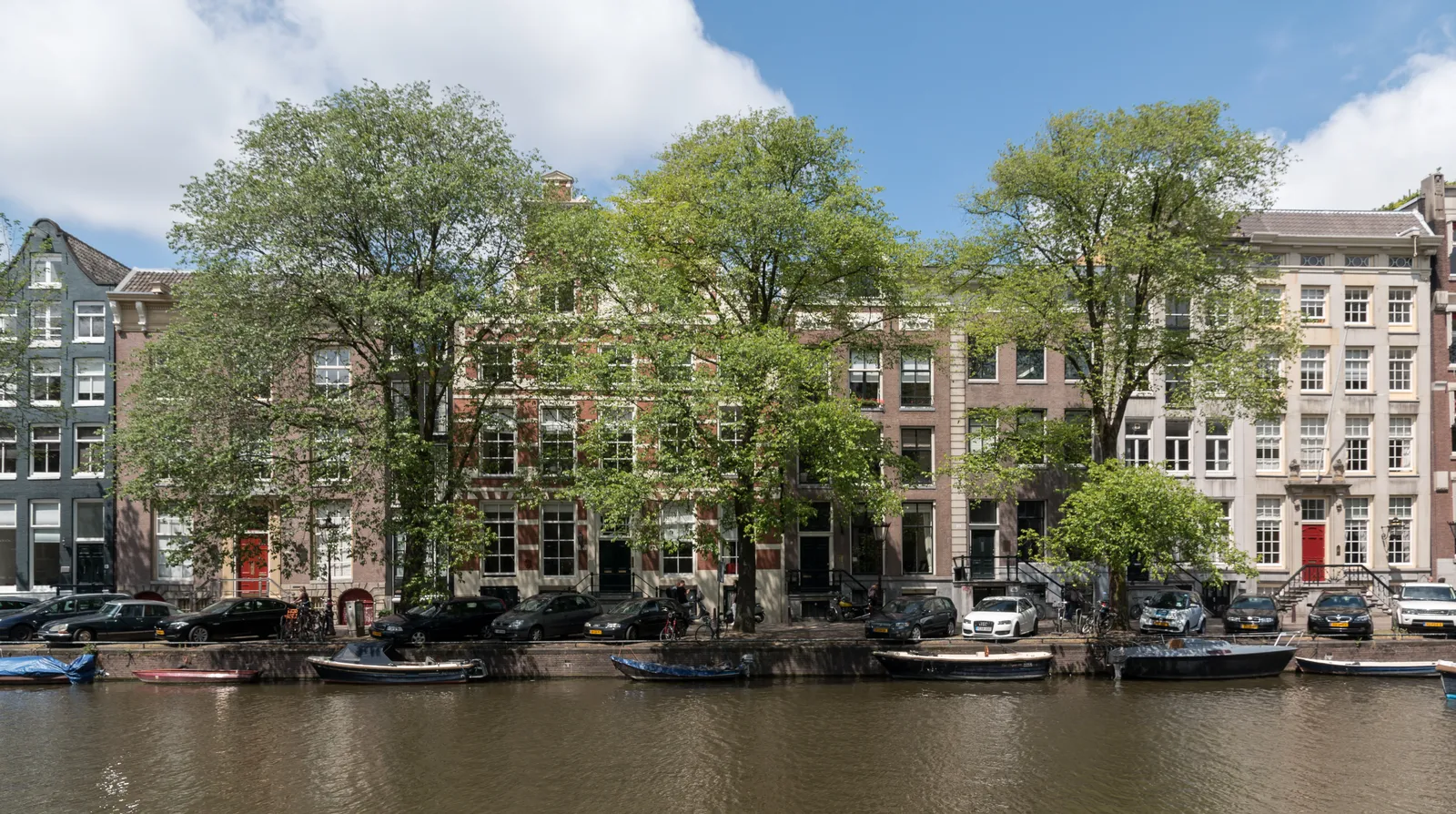
Amsterdam · Prinsengracht
A hotel in Amsterdam during spring or summer costs €150–280 per night for a standard room. Add parking (€30–50/night in a central garage), tourist tax (€18.44 per person per night in 2026) and you're looking at a significant daily spend before you've had breakfast.
A campervan changes the maths entirely. You stay at one of the Amsterdam campings listed above for €20–40 per night. You have your own kitchen, your own bed, and crucially your own vehicle. Tram connections from Camping Zeeburg reach the city centre in 15 minutes. You can leave the van at the campsite and explore by bike or public transport without worrying about a parking space.
"Leave the campsite at 8am, cycle along the Amstel, have coffee on a quiet canal before the tourist crowds arrive. Be back for lunch in your own kitchen."
The other advantage is flexibility. Hotels lock you into a fixed checkout time. With the van, you eat when you want, sleep when you want, and change your plans when you want. If it rains, you're comfortable inside. If the sun comes out, you drive somewhere new.
Amsterdam is also better explored slowly. The Jordaan neighbourhood at 7am, the flower market on a weekday, the Vondelpark in the evening light these moments belong to people who aren't rushing to or from a hotel lobby. A van traveller lives at a different rhythm.
Amsterdam van tip: Park your van at the campsite for the whole duration of your Amsterdam stay and get a 72-hour public transport card (~€22). It's cheaper than moving the van into the city and infinitely less stressful. Cycling from Camping Zeeburg to the Rijksmuseum takes 20 minutes along the waterfront.
For a full cost breakdown and practical details: Why a campervan is smarter than a hotel in Amsterdam.
Ready to hire a campervan in Amsterdam?
Pick up in Amstelveen, 20 min from Schiphol Airport. From €109/day.
Tulip season:
chasing the fields by van

Bollenstreek · April
The tulip fields of the Bollenstreek are one of the most striking landscapes in Europe in April and they're 20 minutes from the Adelaar Campers pickup point in Amstelveen. But the real joy of seeing the bulb fields by van is that you're not limited to one location. You can follow the colour.
The blooms move from south to north through spring, and from the roadside to the deep interior. A route that works especially well: start in Lisse (park near the Keukenhof and walk in before 9am), then drive north via Hillegom and Heemstede to Haarlem for lunch, continue to the Kop van Noord-Holland near Schagen for a second, quieter stretch of fields, and end the day near the coast.
Best time to arrive at the Keukenhof: Gates open at 8am. Arriving before 9am means the gardens are nearly empty. By 11am coach parties are arriving in force. Stay at a nearby farm camping the night before spots in Lisse and Hillegom are available on Campspace and Park4Night.
Beyond the Keukenhof, the fields themselves are free to admire from the road. The most photogenic stretches are along the N208 between Hillegom and Haarlem, around Noordwijkerhout and across the polders between Lisse and Sassenheim. Early morning light makes all the difference drive slowly, pull over when the colours hit.
For the full guide to tulip season by campervan, including a bloom calendar and field-by-field breakdown, read our dedicated post: Visiting Amsterdam for tulip season? Why a campervan beats a hotel →
Volendam & Monnickendam:
the fishing villages
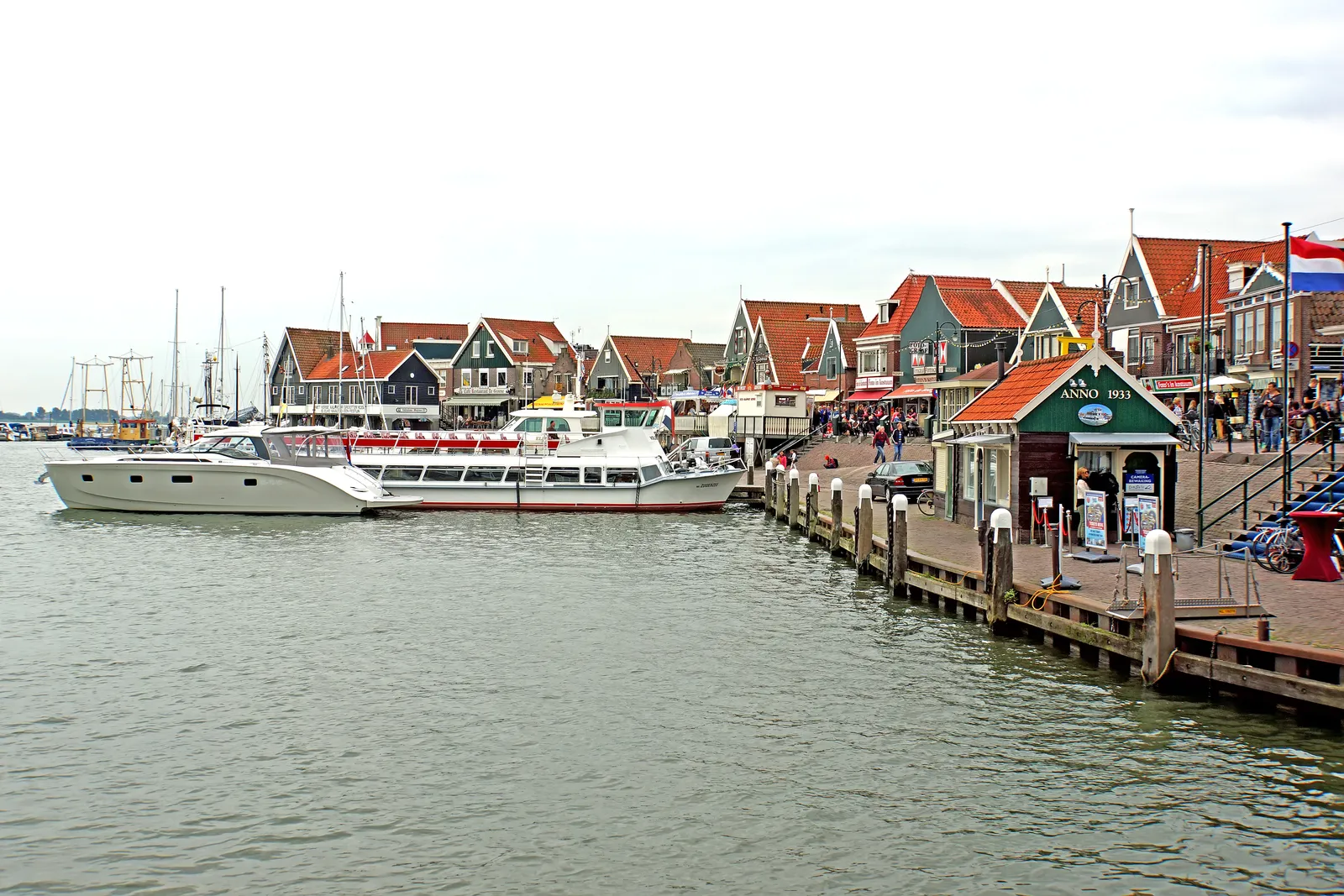
Volendam · IJmeer
Twenty-five kilometres north-east of Amsterdam along the Markermeer, Volendam and Monnickendam are two of the most beautifully preserved fishing villages in the Netherlands. They sit almost next to each other but feel entirely different Volendam is busier and more touristic, Monnickendam quieter and more local.
Volendam is famous for its colourful wooden harbour houses, smoked eel, and if you're interested traditional Dutch dress. Arrive before 10am and you'll have the waterfront almost to yourself. By noon it's busy. Park the van on the outskirts and walk in.
Monnickendam, five minutes further north, is the real gem. A small historic town with a tower clock that plays music on the hour, a beautiful old harbour full of sailing boats, and genuinely good cafés. This is a place to slow down, have a late breakfast and watch the boats.
While you're here: The route between Volendam and Edam (another 5 minutes north) passes through some of the flattest, most classically Dutch polder landscape you'll find anywhere. On a clear morning, the light and the reflections on the water are extraordinary. Cycle or drive slowly.
Campings in the area: Camping Jachthaven Uitdam sits directly on the Markermeer, with views across to Amsterdam. Small, calm and popular with sailors. Campspace hosts are also available in the polders around Purmerend often on working farms with geese in the yard.
The coast & Texel:
dunes, sea and strict rules
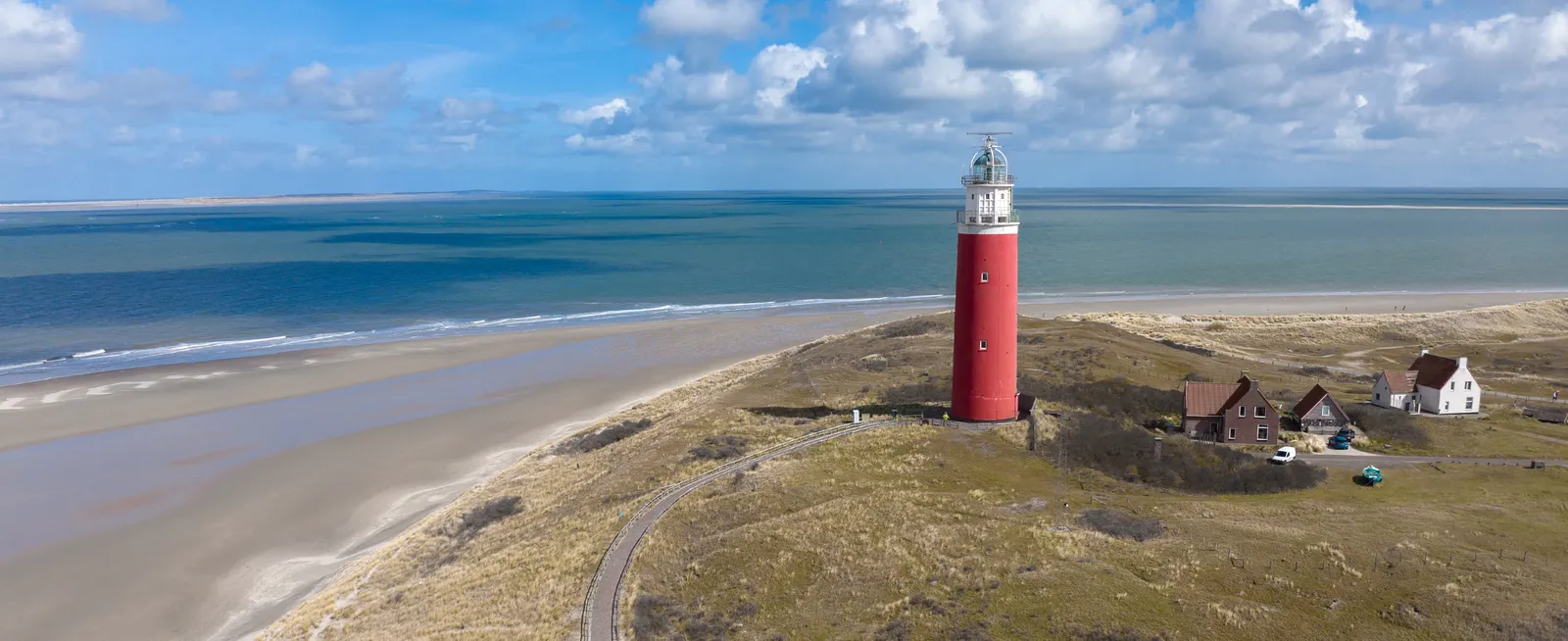
Texel · North Sea dunes
Texel is the largest of the Wadden Islands and one of the most beautiful places in the Netherlands for a campervan trip. It has enormous beaches on the North Sea side, quiet polders and bird reserves in the interior, and a series of small villages De Koog, Den Burg, Oudeschild each with their own character.
Getting there: the TESO ferry runs from Den Helder (90 minutes north of Amsterdam) to the port of 't Horntje on Texel. Crossings run approximately every hour. The journey takes about 20 minutes.
| Ticket type |
Price (approx. 2026) |
Notes |
| Campervan up to 6m + driver | €45–65 one way | Price increases in high season |
| Return trip (same vehicle) | €90–130 | Book in advance in July/August |
| Extra passenger | ~€5–7 per person | Added to vehicle ticket |
| Bicycle (per bike) | ~€4 | Useful if you park the van centrally |
Texel is stunning, but it's also one of the strictest places in the Netherlands for overnight parking outside designated campsites. The island takes its nature reserves and dune habitats very seriously rangers patrol regularly, and fines are issued without much discussion. This is not a place to try your luck.
No wildcamping on Texel. The entire island is within or adjacent to protected Natura 2000 zones. Overnight parking outside registered campsites is actively enforced. Don't risk it there are excellent campsites here and the pitches are worth booking.
The best official options on Texel: Camping Kogerstrand is right behind the dunes near De Koog, within walking distance of the beach. Camping De Shelter is quieter and more inland, near Den Hoorn. Both accept campervans and book out quickly in summer reserve early.
Texel by bike: Rent bikes at the port or from the campsite and leave the van parked for the day. The island has an excellent network of cycle paths through the polders, past the bird reserve at De Slufter, and along the sea dunes. 50km of flat riding with almost no traffic.
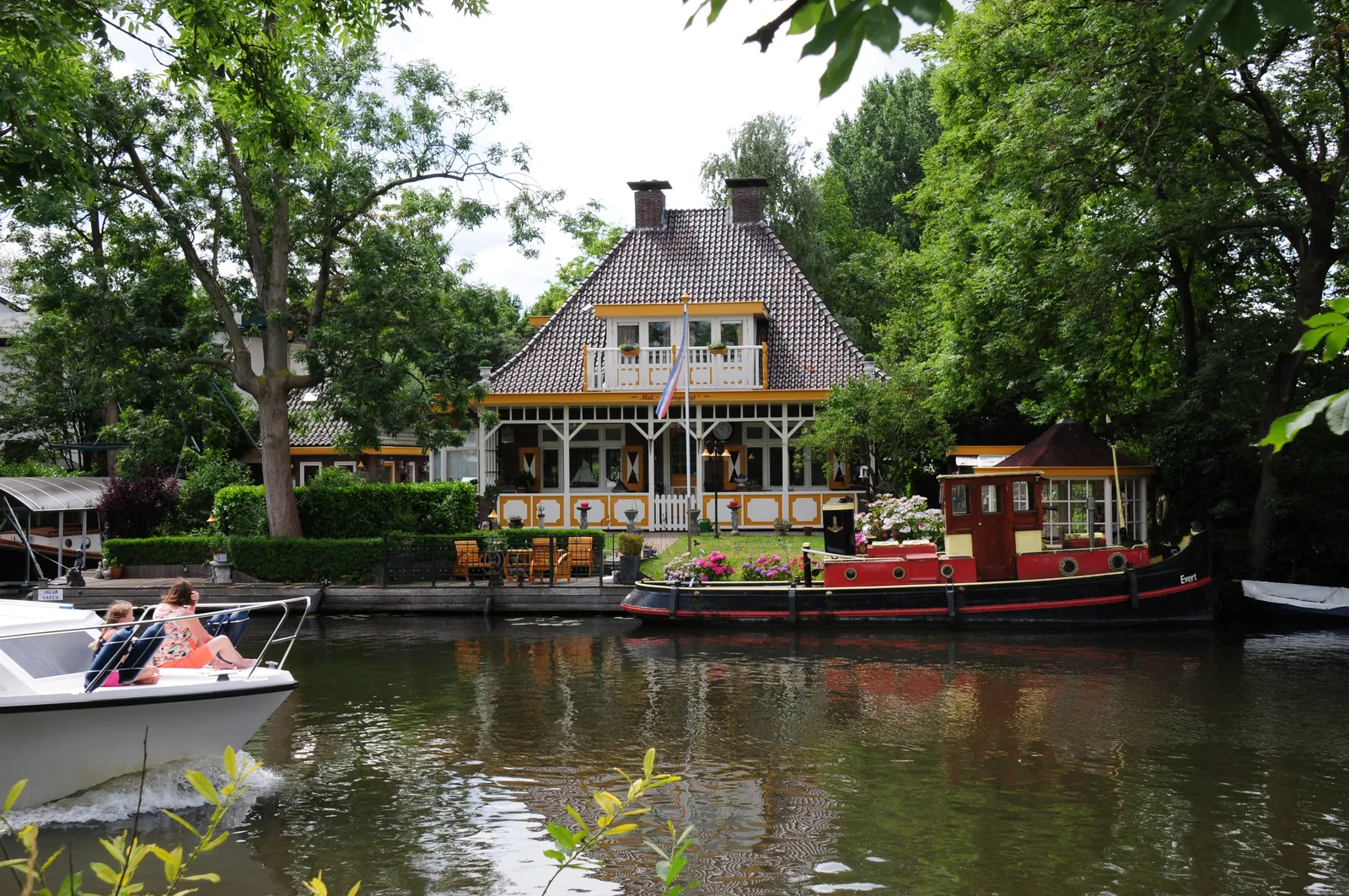
River Vecht · near Maarssen
The River Vecht between Utrecht and Muiden is one of those places that doesn't make it onto many travel itineraries and is all the better for it. The river winds through a low, green landscape lined with 17th-century merchant estates, drawbridges and small locks. The villages of Maarssen, Loenen aan de Vecht and Breukelen sit along it like something from a painting.
This is the Netherlands at its most quietly beautiful. Cycle paths follow the riverbanks, and the route between Maarssen and Breukelen (from which "Brooklyn" takes its name) is one of the most pleasant half-day cycles in the country. No crowds, no queues just flat roads, open water and the sound of birds.
Maarssen itself is worth a morning. It has a lovely old centre with independent shops and one of those cafés that makes apple pie the old way enormous, warm, with real cream. Theehuis De Vecht and a few similar spots along the river do exactly this. Go in the afternoon, sit by the window overlooking the water, and allow more time than you think you'll need.
"The Vecht doesn't shout. It just waits quietly while Amsterdam gets all the attention."
Overnight near the Vecht: Campspace has some excellent hosts in this area farm spots on the river bank or behind country estates. Alternatively, Camping De Molenwaard near Loenen aan de Vecht offers pitches directly on the waterfront. Arrive by afternoon, take a sunset walk along the river, and have the morning largely to yourself before other visitors arrive.
The wilder side:
the Veluwe
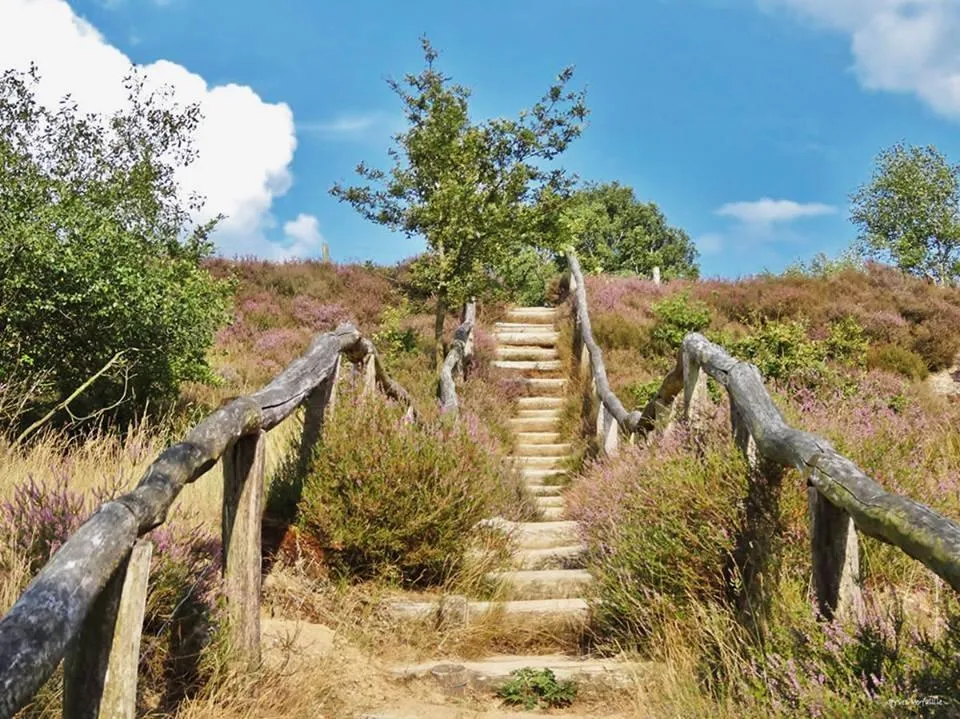
Hoge Veluwe · Gelderland
For anyone who wants the Netherlands to feel a little wilder, the Veluwe is the answer. About an hour from Amsterdam, this is the country's largest nature area 100,000 hectares of ancient forests, sand drifts, heathland and moorland. In late summer (August–September) the heather turns the whole landscape purple. In autumn, the forests go deep red and gold.
The Hoge Veluwe National Park is the centrepiece and one of the most unusual places in the Netherlands. No cars inside, free white bikes at the entrance, and the Kröller-Müller Museum hidden in the middle of the forest housing one of the world's largest Van Gogh collections. It's a strange and wonderful combination.
The wildlife is another draw. Wild boar, red deer, mouflon and if you're very lucky, early morning European wolves, which have re-established themselves in the area over the past decade. Arrive at the park gate at opening time, collect a bike, and head to the quieter northern paths.
Where to stay: The Veluwe has many campings, but the real prize is a Campspace pitch or small minicamping on the edge of the forest. Sleeping with trees around you and waking up to complete quiet is a different experience from a large campsite. Camping De Pampel near Hoenderloo is popular, well-located and accepts campervans. Minicamping De Witte Berg near Otterlo offers a more remote feel.
Combine with: Arnhem is 20 minutes from the Veluwe and has the excellent Open Air Museum (Nederlands Openluchtmuseum) a living collection of historical Dutch buildings moved to a single site. A full day easily.
The Veluwe is one of the best destinations for the May holiday week. Read all tips: May Holiday with a Campervan in the Netherlands, the best destinations.
Zeeland:
salt air and delta light
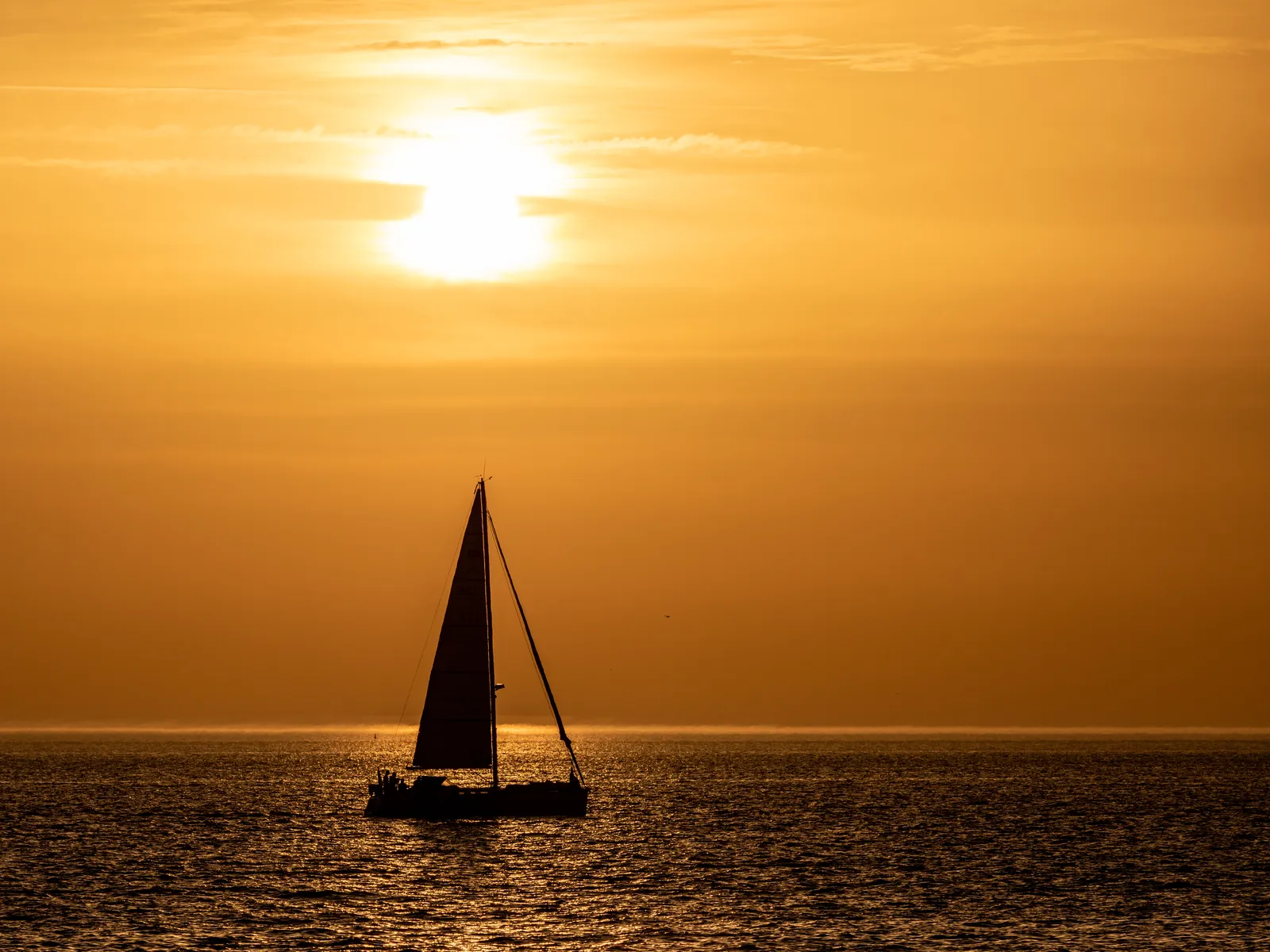
Zeeland · Westerschelde
Zeeland is about two hours from Amsterdam, and it's worth every minute of the drive. The southernmost province of the Netherlands is a world of wide skies, empty beaches, tidal creeks and mussels. The Delta Works the engineering system of dams, sluices and storm surge barriers built after the catastrophic 1953 floods is one of the most impressive things built in post-war Europe, and the Neeltje Jans visitor centre explains it well.
The beaches on Walcheren and Schouwen-Duiveland are among the best in the Netherlands wide, clean and backed by proper dunes. In summer they fill up on weekends, but on a Tuesday in June you can park near Domburg or Vrouwenpolder and walk for an hour without passing many people.
The seafood is worth making the trip for on its own. Zeeland mussels are a national institution eaten simply with white wine, shallots and parsley from September onwards. Oysters from the Oosterschelde estuary are available year-round. The fishing town of Yerseke is the place to go modest, direct and completely serious about its shellfish.
Campings in Zeeland: The province is well set up for campervan travellers. Camping Delftse Hoeve near Middelburg is a calm option with good access to Walcheren. For a sea view, Camping De Veerhoeve near Wolphaartsdijk looks across the Veerse Meer. Campspace hosts are increasingly active in the area a farm near the Oosterschelde is a genuinely special place to sleep.
If you're coming from Amsterdam, consider breaking the drive at Dordrecht the oldest city in Holland, and strangely undervisited. A lunch stop on the waterfront there pairs well with an afternoon arrival in Zeeland.
The Adelaar campervans:
built for vanlife in the Netherlands
Every destination in this guide, Amsterdam, the tulip fields, Texel, the Veluwe, Zeeland, was thought about when building the Adelaar fleet. All three campervans are fully off-grid: solar panels, lithium battery, diesel heating and a proper kitchen. No hook-up required.
Choose between the Horizon (VW Crafter, spacious layout), the Zonnewijzer (Citroën Jumper, compact and nimble) or the Albatros (VW Crafter L3, the premium option with indoor shower and permanent queen bed). All pick up in Amstelveen, 20 minutes from Schiphol Airport.
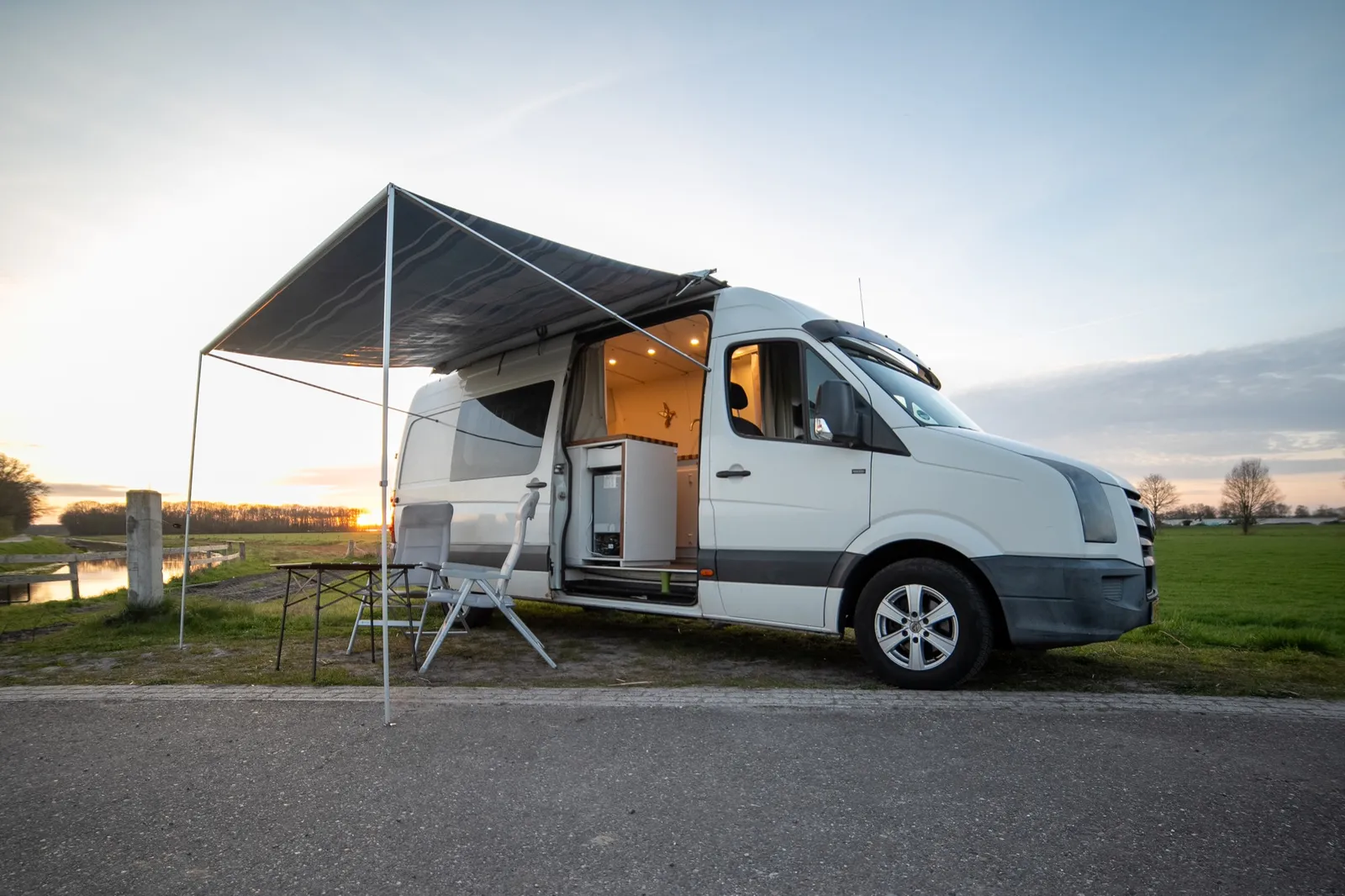
Adelaar Albatros · built for the Netherlands
The Albatros is a full conversion built for exactly this kind of travelling. Everything you need for a week on the road without depending on a campsite for anything.
🚿
Hot indoor shower
Full hot water system with interior shower compartment. No campsite shower block needed.
☀️
Solar + lithium
Roof solar panels feeding a 200Ah lithium battery. Run everything for days off-grid.
🛏️
Permanent queen bed
Always made up. No converting the dining table every night just close the curtains and sleep.
🍳
Full kitchen
Two-burner gas hob, 40L compressor fridge, chopping space. Cook properly, wherever you are.
🌡️
Diesel heating
Webasto diesel heater keeps the van warm on cold spring nights no hook-up required.
💻
USB + 230V sockets
Charge everything on board. Work remotely, keep cameras charged, run a laptop if needed.
🚲
Bike rack (on request)
Rear bike carrier for two bikes available on request. Perfect for Texel, the Veluwe and the Vecht route.
📍
Pick up in Amstelveen
20 minutes from the tulip fields, 15 minutes from Amsterdam centre. The ideal starting point.
"Everything in this guide is within a tank of fuel from Amstelveen. All you need is a week and a plan or no plan at all."
Start your vanlife adventure
Three fully off-grid campervans available from Amstelveen. From €109/day, pick up 20 minutes from Schiphol. Send a WhatsApp to check availability; we reply personally, no booking platform.
Send WhatsApp
View all campervans