Travel tips

The best campervan
destinations in September

September is the best kept secret of the campervan season. Schools are back, campsites are half empty, the sea still holds the summer's warmth and rates drop back to mid season. Five destinations that are at their best in September, and which van to take.

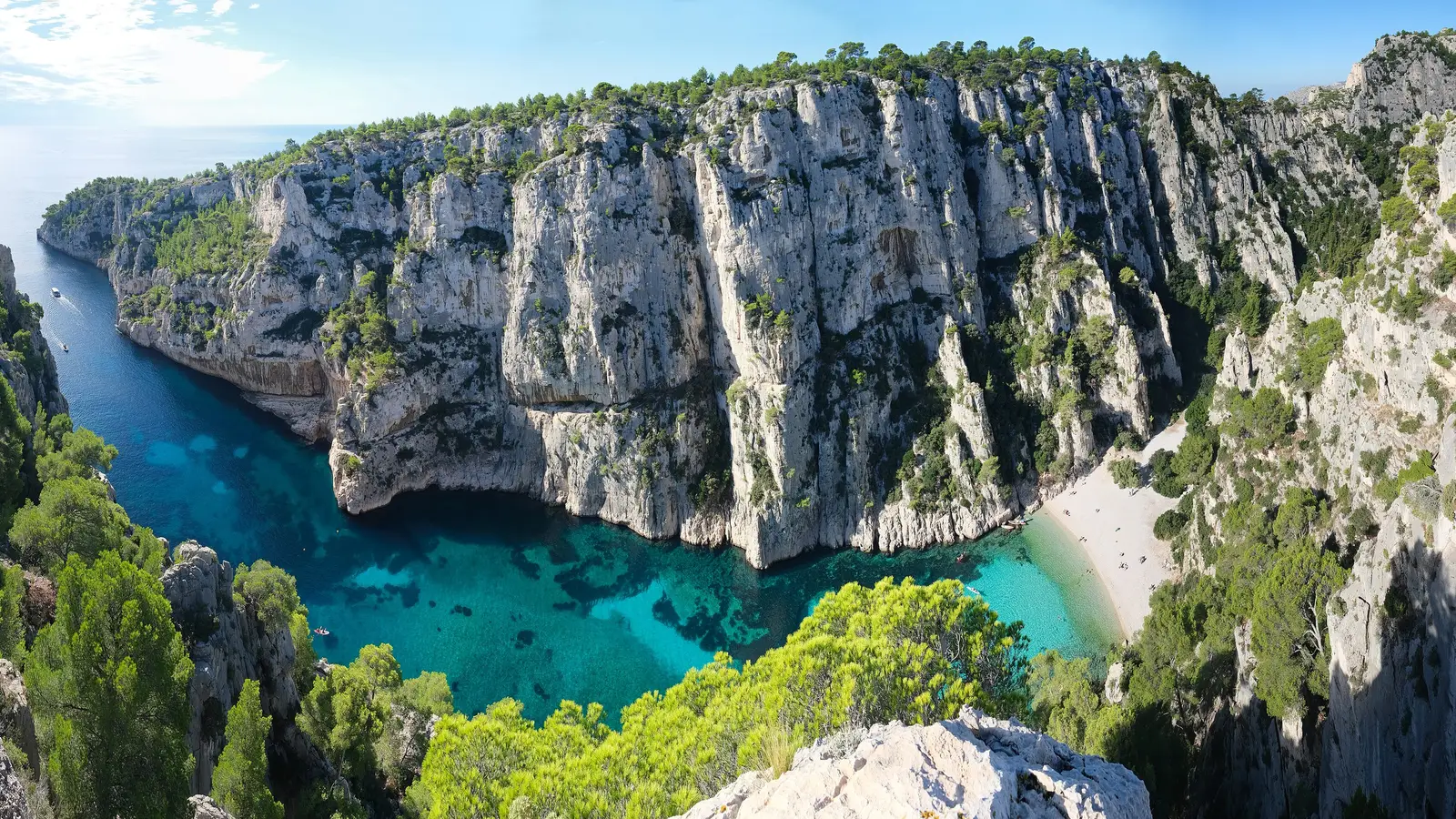
Calanque En-Vau near Cassis in southern France, a turquoise inlet between white limestone cliffs

Adelaar Campers  ·  September 2026  ·  7 min read


Why September The month Europe belongs to you again

In July and August you travel alongside the whole of Europe. You book ahead, you queue at the tunnel, and the best spot by the water is taken before you arrive. From the first week of September all of that falls away. The French, Germans and Italians are back at work, the coast empties out and the mountain passes go quiet.

The weather is still good. The Mediterranean has been storing heat all summer and is often warmer in September than in June. In the mountains the days are clear and the nights are crisp, which is exactly the weather in which a van with proper heating becomes a real advantage.
"Summer is for those who have to travel then. September is for those who can choose. Same sun, half the crowds, lower price."


1 · Warmth in the south Provence and the Calanques

Calanque d'En-Vau in Calanques National Park near Cassis, Provence

Calanque d'En-Vau, Calanques National Park near Cassis. Photo: kallerna, CC BY-SA 4.0, via Wikimedia Commons.

around 1,250 km from Amstelveen · 10 to 14 days · 25 to 28 degrees by day

If you want real summer in September, drive south. Between Marseille and Cassis lies Calanques National Park: white limestone cliffs dropping straight into the sea, with turquoise inlets between them. In August large parts are often closed because of fire risk and the car parks are full. In September you can walk almost everywhere again, and the beach at En-Vau is sometimes almost yours alone.

From there you have plenty of choice. The Gorges du Verdon for mountain roads, the Camargue for the flats and the flamingos, or the Ardeche as a stop on the way down. What you miss in September is the lavender, harvested back in July. What you get instead is the grape harvest in the Cotes du Rhone and sea water that still feels like August.

  • Sleep outside the coastal towns themselves, the villages behind Cassis and La Ciotat are quieter and cheaper
  • Take the route via the Ardeche and the Cotes du Rhone, it saves tolls and it is prettier
  • Fill fuel and water in the villages, there is nothing inside the park itself
  • The Mistral can blow in September too, look for shelter on the eastern side of hills

2 · Mountains without the crowds The Pyrenees

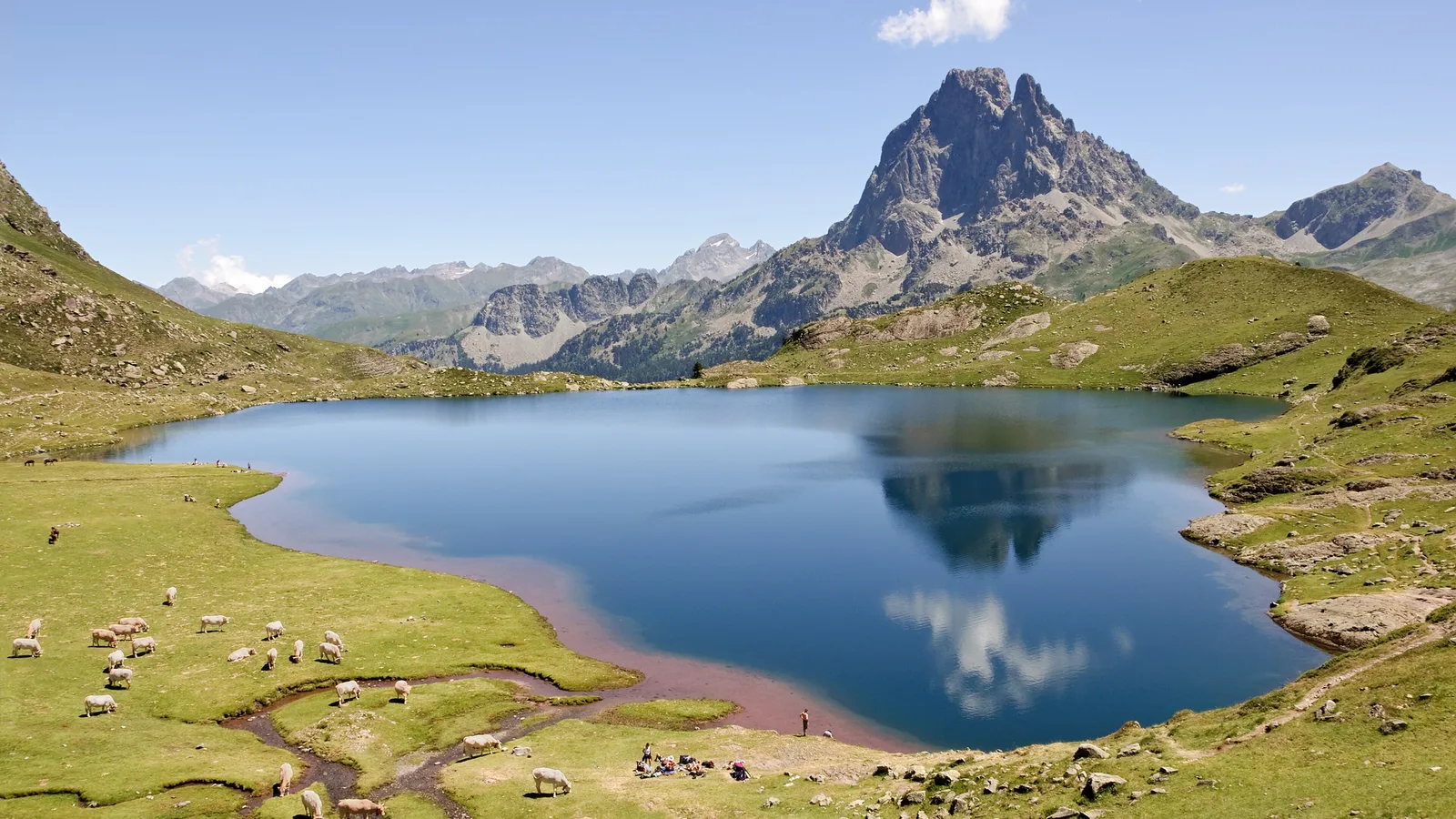
Lac Gentau with the Pic du Midi d'Ossau reflected in the water, French Pyrenees

Lac Gentau and the Pic du Midi d'Ossau, Pyrenees-Atlantiques. Photo: Myrabella, CC BY-SA 3.0, via Wikimedia Commons.

around 1,400 km from Amstelveen · 12 to 16 days · 20 to 24 degrees in the valleys

The Pyrenees are at their finest in September. The August heat has gone, the summer herds come down from the high pastures and the air is sharp enough to see into Spain from a pass. The mountain lakes, the cirques of Gavarnie and Troumouse, the Col du Tourmalet and the Route des Lacs are all still open, but without the bumper to bumper camper traffic of August.

What you do notice is the temperature at night. At 1,200 to 1,600 metres it can drop close to freezing in September. Which is exactly why this is a destination for a van with real heating on board, not for a tent.

Watch the vlog Our own road trip through the Pyrenees Koen filmed the route, the overnight spots and how the van handled the mountain passes. Watch on YouTube →
  • Drive the French and Spanish sides as a loop, via the Col du Somport or the Bielsa tunnel
  • High passes can be icy at night after late September, check road status before heading up
  • The Spanish southern side is warmer and drier, ideal when it rains on the French side
  • Water is easy to find in almost any village, plan fuel ahead in the high valleys

3 · Lakes and cities Italy around Milan

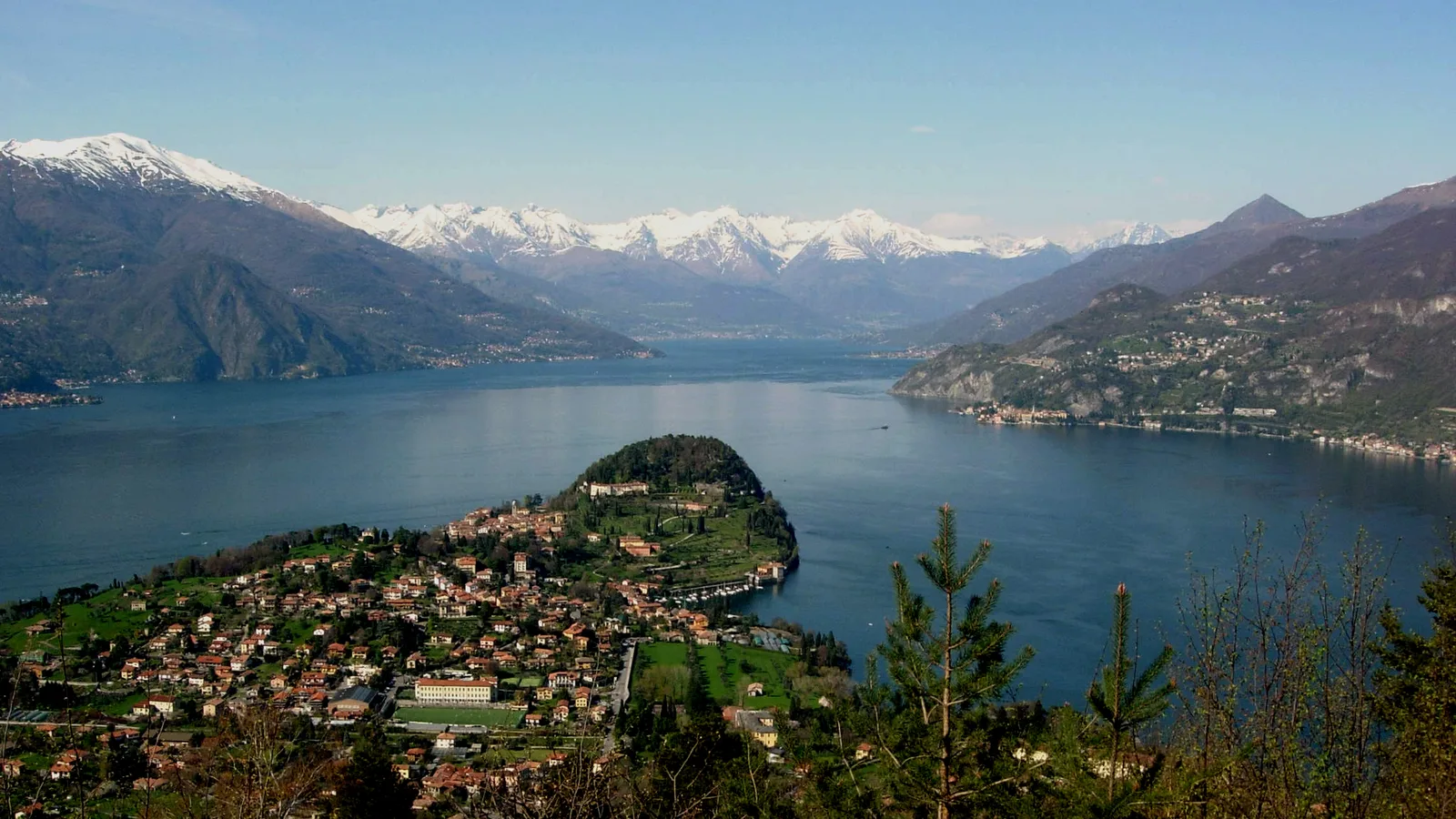
View over Bellagio and Lake Como with snow capped Alps in the distance

Bellagio on Lake Como, Lombardy. Photo: Joyborg, public domain, via Wikimedia Commons.

around 1,000 km from Amstelveen · 8 to 12 days · 23 to 26 degrees by day

The area north of Milan is the most underrated campervan destination in Europe, and in September everything about it works. Lake Como, Lake Maggiore and the smaller Lake Orta sit an hour apart, with mountain roads between them that clog up in summer and simply flow now. The water is still warm enough to swim in, the lakeside terraces are no longer fully booked and the ferries still run a summer timetable.

Combine it with the cities. Bergamo Alta sits on a hill inside its old walls and takes half a day. Milan itself is awkward in a van, but from an aire on the edge you can take the metro straight in. And since you are already that far south, going home over the Stelvio or the Gotthard pass is the finest detour you could ask for.

  • Italian lakeside villages are tight, pick aires outside the centres and take the bus or the boat
  • The Swiss route down requires a motorway vignette, around 40 Swiss francs
  • Italy charges tolls per kilometre, keep cash or a card to hand
  • Many Italian town centres have ZTL restricted zones, do not drive into them with the van

4 · Small and complete Slovenia

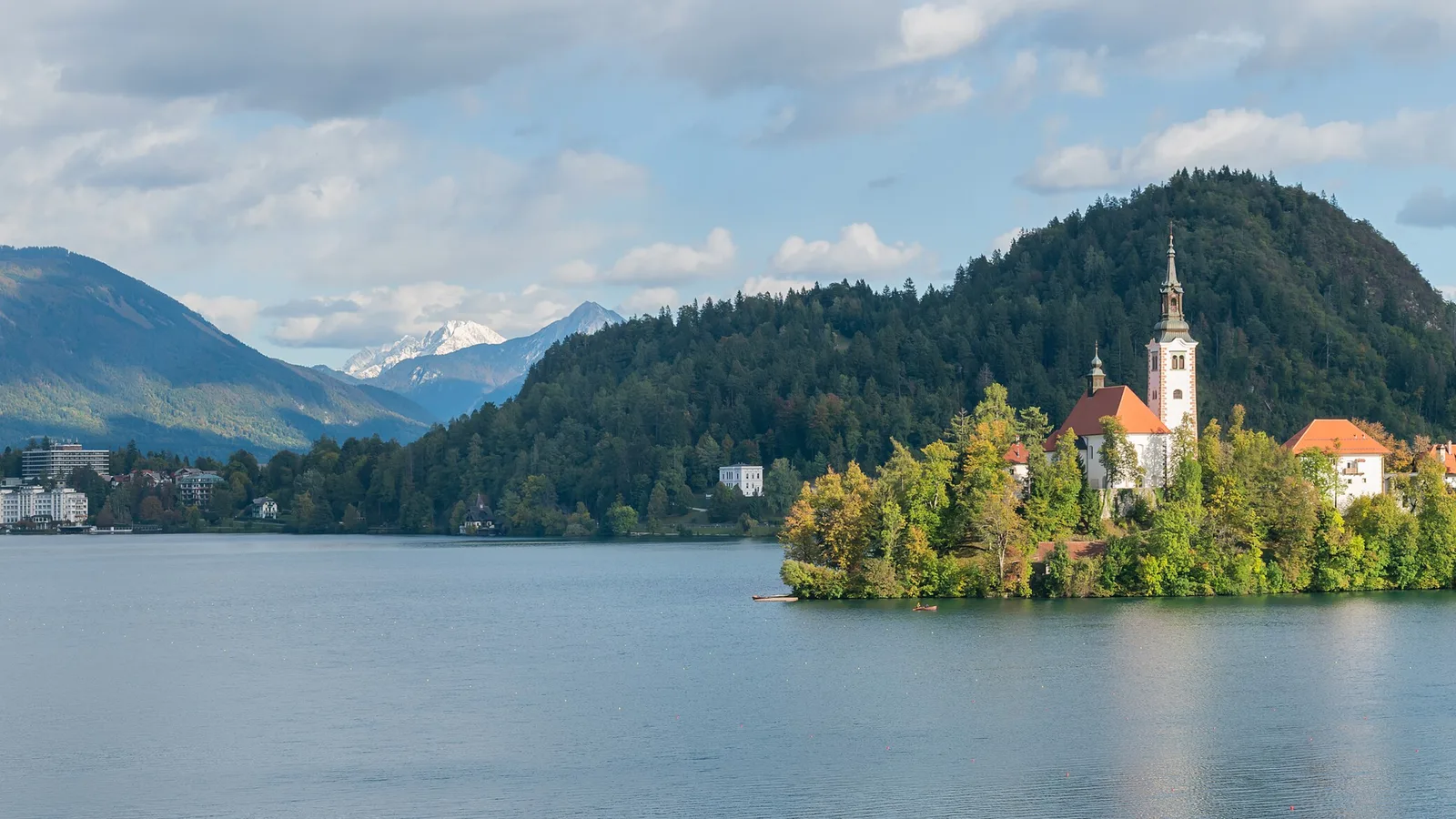
The island in Lake Bled with the Julian Alps behind it, Slovenia

Bled Island in Lake Bled, Upper Carniola. Photo: Krzysztof Golik, CC BY-SA 4.0, via Wikimedia Commons.

around 1,150 km from Amstelveen · 10 to 14 days · 20 to 24 degrees by day

Slovenia is roughly the size of Wales and it has everything: high Alps, a turquoise river, caves, wine hills and fifty kilometres of coast. You can drive from Lake Bled to the Adriatic at Piran in two hours. For a campervan that is ideal, because you can move camp every day without losing half a day on a motorway.

The Soca valley is the highlight. The river is a colour that looks exaggerated in photographs until you stand next to it. In September the water is low and clear, the rafting crowds have gone and the Vrsic pass with its forty-nine hairpins is still open. Wild camping is not allowed in Slovenia, but the country has a dense network of small, cheap campsites and official aires.

  • Slovenian motorways need an e-vinjeta, buy it online before you cross the border
  • Austria also requires a vignette if you route via Salzburg or Villach
  • The Vrsic pass is narrow and steep, drive it early in the morning in a van this size
  • Combine it with the Plitvice lakes in Croatia, less than two hours further on

5 · Close by and at its best The southern German wine country

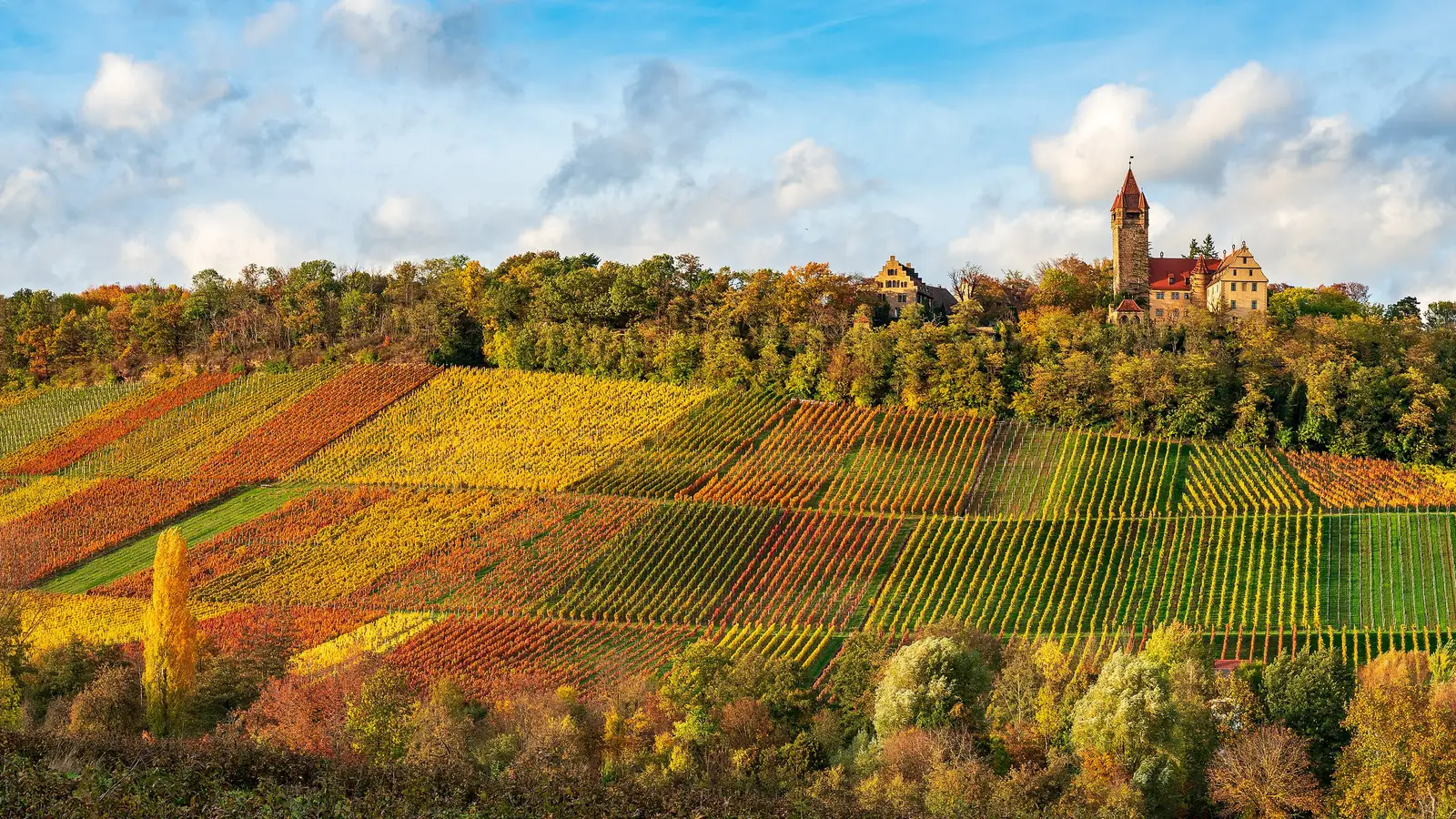
Vineyards in the hills of Baden-Wurttemberg in autumn, with a castle on the hilltop

Vineyards near Brackenheim with Schloss Stocksberg, Baden-Wurttemberg. Photo: Roman Eisele, CC BY-SA 4.0, via Wikimedia Commons.

around 550 km from Amstelveen · 4 to 8 days · 19 to 23 degrees by day

If you do not have two weeks, drive to southern Germany. You reach Baden or Wurttemberg in a day, and September there is harvest month. The hills around the Kaiserstuhl, the Tauber valley and the Neckar turn colour, the villages hold their Weinfeste, and small well kept Stellplatze line the wine routes, often at a grower's own gate and often for a few euros a night.

It is the destination for a long weekend or a week: walk the vineyards in the morning, move the van in the afternoon, buy a bottle in the evening from the grower whose field you are parked in. Combine it with the Black Forest, Lake Constance or Alsace across the Rhine, all within an hour or two.

  • Germany charges no tolls for vans under 3.5 tonnes, only fuel and pitches cost money
  • Winery Stellplatze often cannot be reserved, arrive before four in the afternoon
  • German city low emission zones need an Umweltplakette, easiest to arrange in advance
  • Ideal as a first campervan trip: close, good roads, everything organised

Which van For September, take the Horizon

All three of our vans are fully off-grid, but for September there is a clear winner. The difference shows after sunset. In the Pyrenees, in Slovenia and in the German vineyards, a day of 22 degrees cools to around eight overnight. That is when you want heating that works without sun and without a hook-up.

Horizon

from €129 a day in September

  • Webasto diesel heater. Warm nights in the mountains, even when the battery runs low on a grey day
  • 600 Wp of solar and a 3.65 kWh battery. The September sun sits lower, so you want panel capacity to spare
  • Electric awning. Shade at the touch of a button on a warm Provence afternoon, or a dry seat in an autumn shower
  • Bed of 175 by 210 cm. The longest in the fleet, which matters on a two week trip
  • Hot outdoor shower and drinking water filter. Days on end self sufficient, including where there is no campsite

Heading mainly south, to the Calanques or the Italian lakes, where nights stay mild? Then the Zonnewijzer from €109 a day is plenty. Travelling with more luggage or wanting more space inside, look at the Albatros. But for mountains and autumn nights, the Horizon is the right van.


Good to know The practical side of a September trip


Keep reading

Still going in September?

Pick up at Amsterdam and Schiphol. Three self-built, fully off-grid campervans from €109 a day. Mid season rates and a three day minimum from September.

Hire a campervan in Amsterdam See the Horizon

Photo credits. The destination photographs come from Wikimedia Commons and are free to use under the licences shown: Calanque d'En-Vau by kallerna (CC BY-SA 4.0), Lac Gentau by Myrabella (CC BY-SA 3.0), Bellagio by Joyborg (public domain), Bled Island by Krzysztof Golik (CC BY-SA 4.0), Brackenheim / Schloss Stocksberg by Roman Eisele (CC BY-SA 4.0). Images have been cropped and optimised for the web.