Blog

Stories, tips and practical guides on off-grid travel.

Off-grid camping with a campervan

There is something special about waking up without the sounds of a campsite. No static caravans, no children kicking a ball against your van at seven in the morning. Just silence, a view you chose yourself, and coffee that tastes better than at home.

Free camping is for many of our van renters the heart of the trip. Not as a gimmick, but because it fundamentally changes the way you travel. You are no longer dependent on a hook on a field and a trickle of water that passes for a shower. You simply park where you want to park.

But then. How do you actually do it well?

1. Know the rules, or pay the price

Off-grid travelling does not mean you can just unroll your bed anywhere. The rules differ considerably per country and sometimes per municipality.

  • In the Netherlands you are officially not allowed to stay overnight outside campsites. Enforcement varies greatly, but the Wadden Islands and the coast are places where you are more likely to get a fine than in a quiet village in Drenthe.
  • In Germany there is a tolerated exception: stopping for one night "to recover driving ability" is often left undisturbed. But that is not a free pass.
  • In Scandinavia you have much more freedom thanks to the right of public access, as long as you treat the environment with respect.
  • In Southern Europe it varies considerably. Coastal areas are stricter than the interior, especially in summer.
Pro tip Use apps like Park4Night or Campercontact to check spots and read other travellers' experiences. For France, France Passion is highly recommended: you sleep on farms and at wine growers, legally and often with a bottle of wine included.

2. Don't choose your spot in the dark

The worst decision you can make is choosing a spot after you've already been driving around for an hour and are exhausted. During the day, drive by a potential spot first. Is the ground solid enough if it rains? Is the campervan level, or will you be sleeping at an angle? Is there a streetlight that will illuminate your bedroom all night?

Also look at the surroundings. A deserted car park that looks quiet during the day can have a different atmosphere at night. Trust your instincts.

A phone signal need not be a requirement, but make sure you know where you are and how to get out.

3. Go truly off-grid: power and water

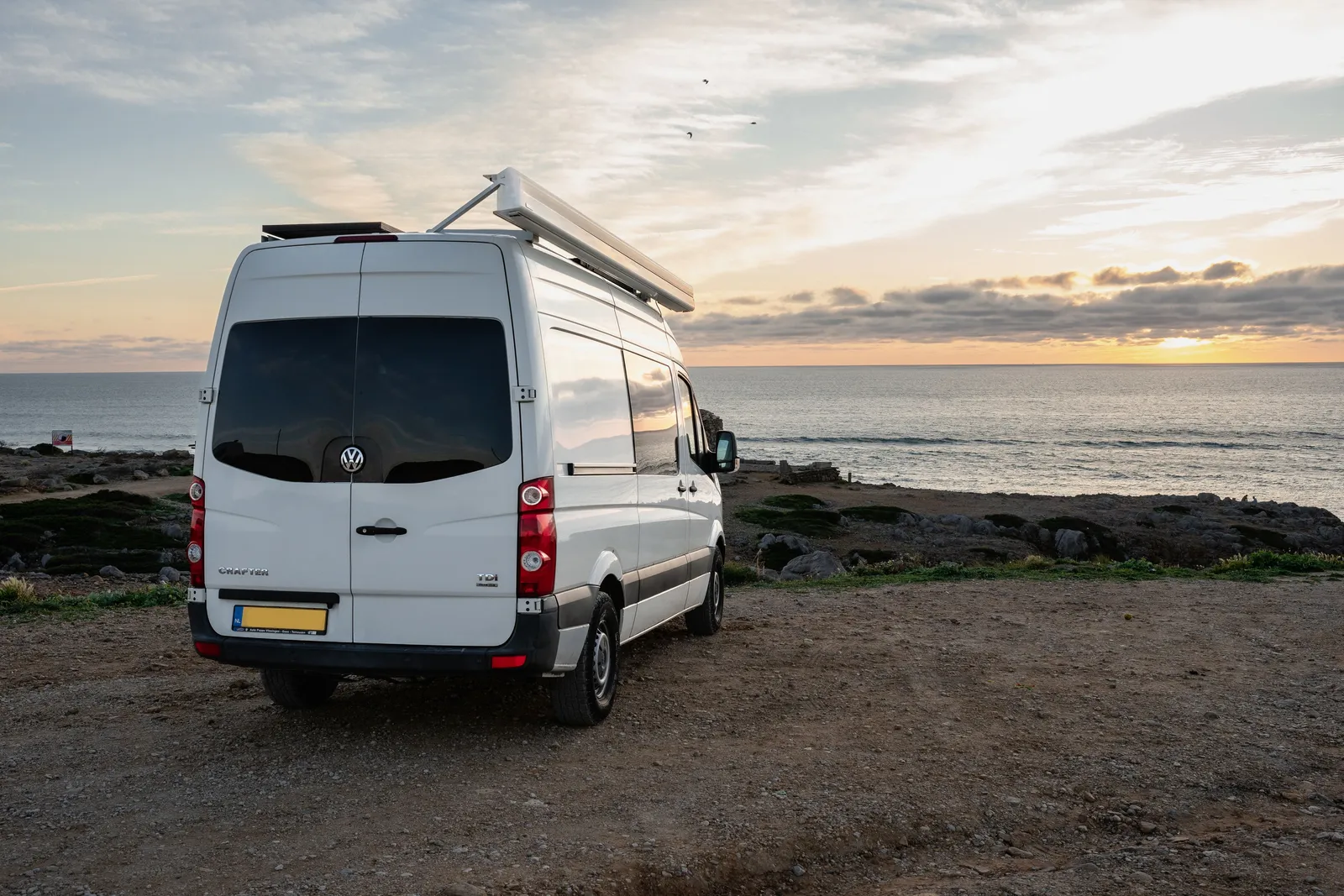
The vans at Adelaar Campers are built for autonomy. Large solar panels, a powerful battery, a generous water tank and a diesel heater for cold nights. You don't need to be plugged in at a campsite, as long as the sun keeps shining.

But even a good system requires conscious use. Charge devices when the sun is out. Keep an eye on your battery status, especially on cloudy days. Shower efficiently and use soap that nature can handle.

Off-grid living is not about doing without, but about carefully tracking what you have.

4. Look like someone who is parking

This is perhaps the most practical tip. The chance that someone will approach you is much smaller if it doesn't look like you are camping.

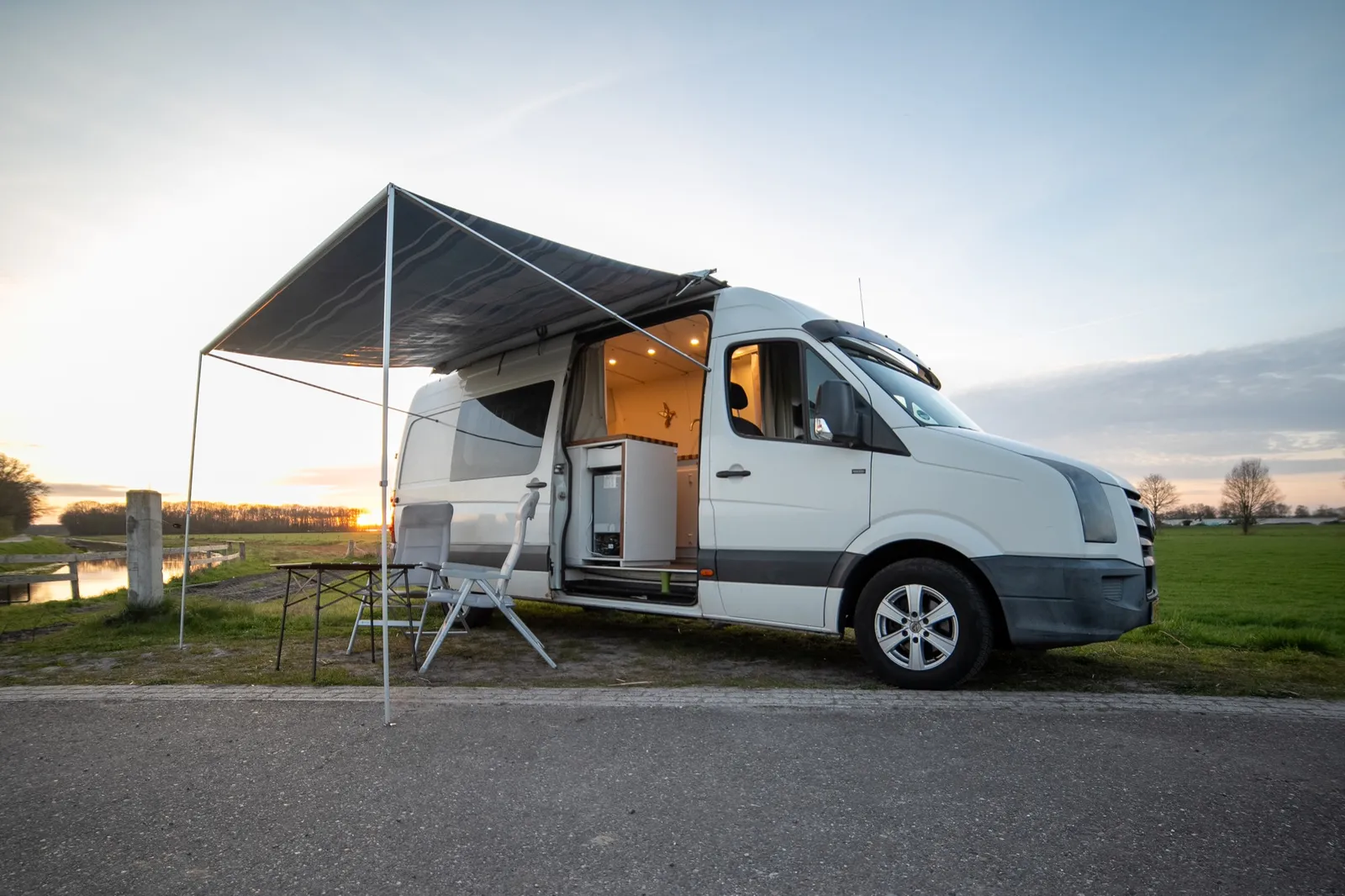
Folding chairs outside, awning rolled out, barbecue on the side — that is asking for attention. Curtains closed, van tidy, nothing scattered around. Then you're just a parked van.

Never leave litter behind either. Rules in many countries are tightened because of nuisance and damage. So lead by example — something the local population will certainly appreciate.

5. Safety is not an afterthought

Park so that you can drive forwards if you need to. Always put the curtains up before you go to sleep and don't leave valuables in plain sight.

And if a spot doesn't feel right: leave. You'll never sleep better than on a spot that feels good.

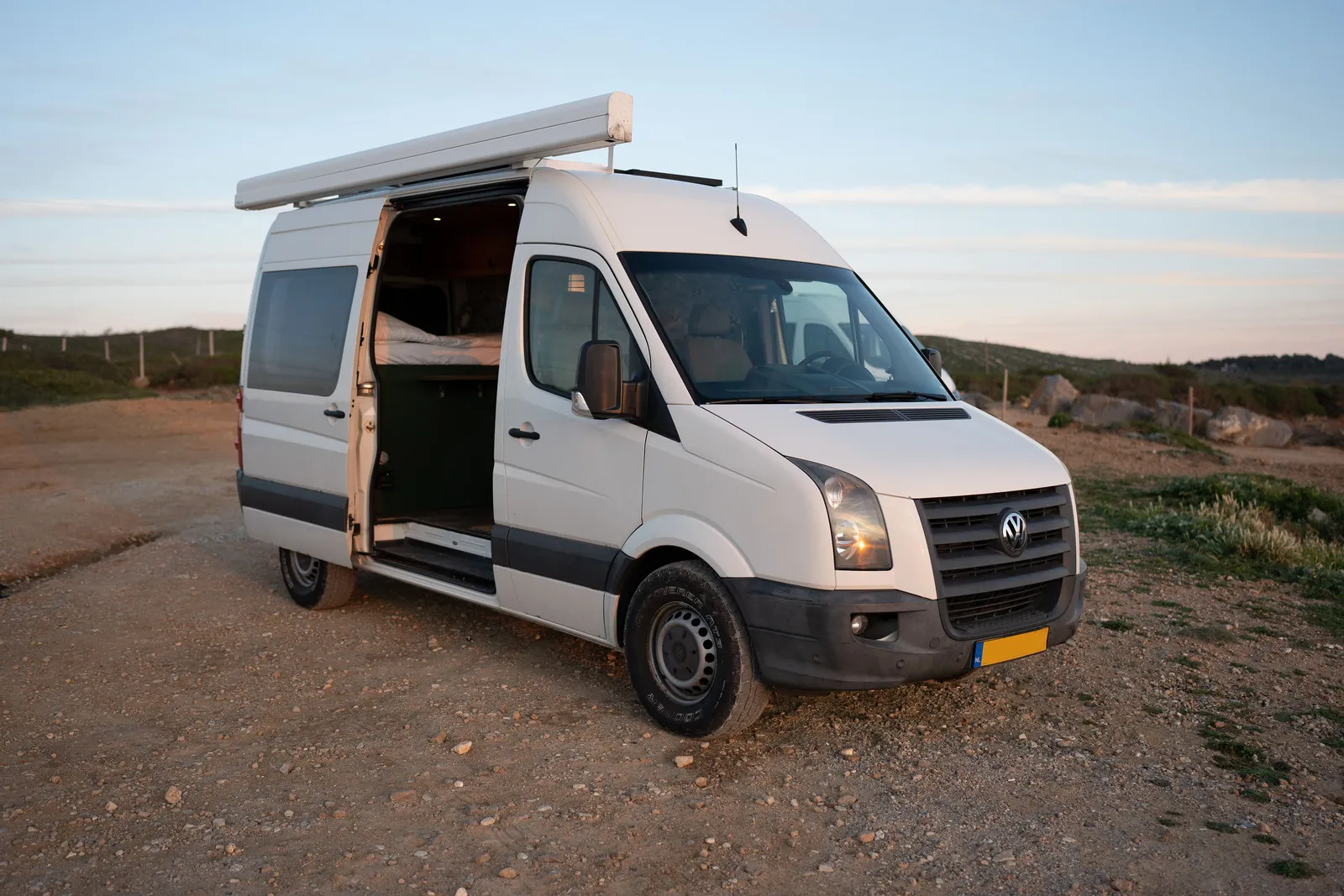
Our vans are built for this kind of travel. See the Albatros, the Horizon or the Zonnewijzer and plan your next trip.

Red tulip fields in the Bollenstreek near Hillegom

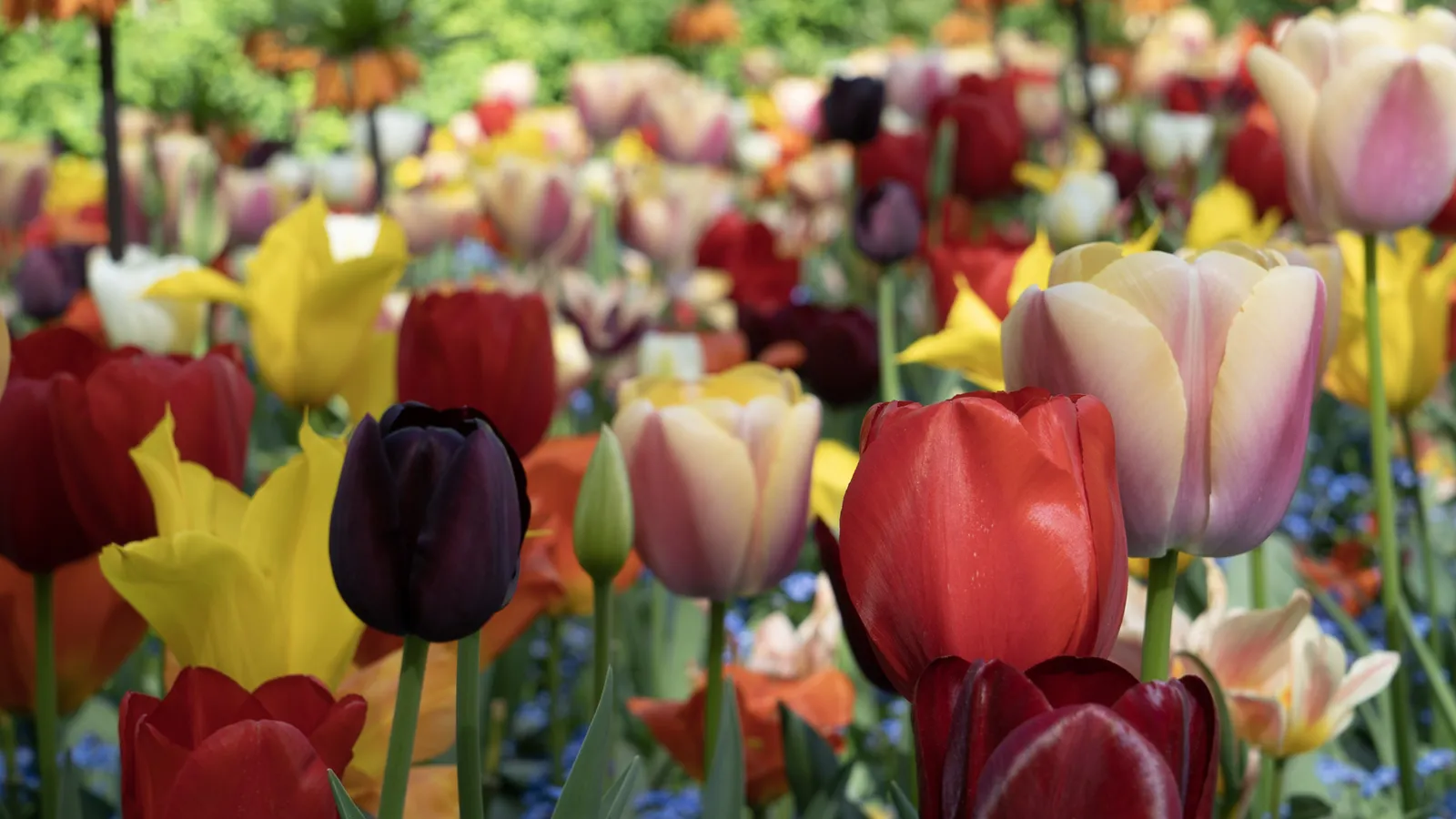
Nowhere else will you see a show like the Netherlands in April: kilometres of fields stretching out in vivid red, bright yellow and purple, interspersed with polder skies and windmills. A campervan is exactly the right way to experience it.

Every spring the tulip season draws thousands of visitors to the Netherlands. But from a hotel room you miss the best part: the early morning, when the dew still sits on the petals and the roads are still empty. Most tulips are in full bloom from mid-April to mid-May, but crocuses, hyacinths and daffodils are already colouring the fields from mid-March. Park the campervan the evening before, and you're right in the middle of it at sunrise.

Below we set out the three most important regions for you, with practical information on routes, timing and overnight options.

Yellow tulip fields in the Netherlands

Tulip fields in the Bollenstreek

When to go?

The tulip blossom often begins in mid-March. This varies slightly from year to year and depends on temperature and weather conditions. Those who want to be certain should check the website of the relevant route or tulip festival in advance for the current bloom percentage.

Period What's blooming? Crowds
Mid-MarchCrocuses, early daffodilsQuiet
Late MarchHyacinths, early tulipsModerate
Mid-AprilTulips in full bloomBusy
Early MayLate tulips, irisesQuieter

The three best regions for the campervan

Route 01

The Bollenstreek: Haarlem, Leiden and the Keukenhof

You'll find the most fields in the Bollenstreek in the triangle between Leiden, Haarlem and Noordwijk. The absolute mecca of the tulip is the Keukenhof in Lisse. The Bollenstreek has the largest and most varied offering in the Netherlands, with mapped campervan routes through ribbons of flowers along the Leidse vaart and the dune edge.

→ Central point: Lisse / Keukenhof  ·  → Best: late April  ·  → Good campervan pitches available

Route 02

Noordoostpolder: the largest tulip area in the Netherlands

Every year, from mid-April to early May, the Noordoostpolder transforms into a sea of colour with over 2,000 hectares of blooming tulip fields. There are two well-signposted routes: a cycling route of approximately 24 kilometres past the most beautiful tulip fields around Emmeloord, Creil and Bant, and an annually changing car route of approximately 114 kilometres in 2025 through the most spectacular bulb fields of the polder.

→ Central point: Emmeloord  ·  → Cycling route: 24 km  ·  → Car route 2025: 114 km

Route 03

Kop van Noord-Holland: tulips by the sea

In the Kop van Noord-Holland you combine bulb fields with the North Sea coast, dunes and characteristic polder villages. There is a dedicated campervan route along the tulips that connects this region as a whole. You can also get your tulip fix on Texel. The crossing by ferry makes it a small adventure.

→ Central point: Schagen / Den Helder  ·  → Combinable with Texel  ·  → Quieter than the Bollenstreek

Purple tulip fields in the Bollenstreek
Noordoostpolder, Flevoland
Red and yellow tulip fields in the Bollenstreek
Keukenhof, Lisse

Practical: what you need to know

Overnight stays
In spring the campsites in the bulb regions are already fairly busy. Book campervan pitches early, especially around the Keukenhof and in the Noordoostpolder during the Tulip Festival. Small farm campsites with views over the fields are popular and fill up quickly. If you want to stay flexible: the Noordoostpolder and the Kop van Noord-Holland offer more space and less crowds than the Bollenstreek.

Driving and cycling
The narrow dike roads and cycle paths through the bulb fields are not always suitable for large campervans. Park the campervan in a good central location and take the bike for the actual flower route. That gives much more freedom and you'll see more. Cycling is a particularly beautiful way to experience the tulip blossom.

Photographing tulips
The best light conditions are early in the morning and just before sunset. Since the fields are essentially normal agricultural land, stay on the public road or designated paths. Do not enter the fields: you damage the bulbs and that counts as damage to property.

Practical tip The current cycling and car routes for the Noordoostpolder can be downloaded free of charge via tulpenfestival.nl/routes. Check the current bloom percentage on the website to avoid disappointment.
Colourful tulip fields in Hollands Kroon

On the road through the spring landscape

Combine your route

Not only in the Bollenstreek and the Noordoostpolder, but also in the north and south of the Netherlands you can experience the tulip season: on Texel or in the province of Zeeland. This makes a multi-day campervan trip possible where you follow the blooming spring from north to south, or the other way around.

A circuit that works well: start in the Kop van Noord-Holland, drive south via the Bollenstreek and then make a loop back to the Noordoostpolder. Three to four nights gives you enough time to explore all regions without rushing.

Purple and yellow tulip fields in the Netherlands

Red and yellow tulips in the Bollenstreek

Drive into the tulip season in one of our campervans. See the Albatros, the Horizon or the Zonnewijzer — available for hire from Amstelveen, seven days a week.

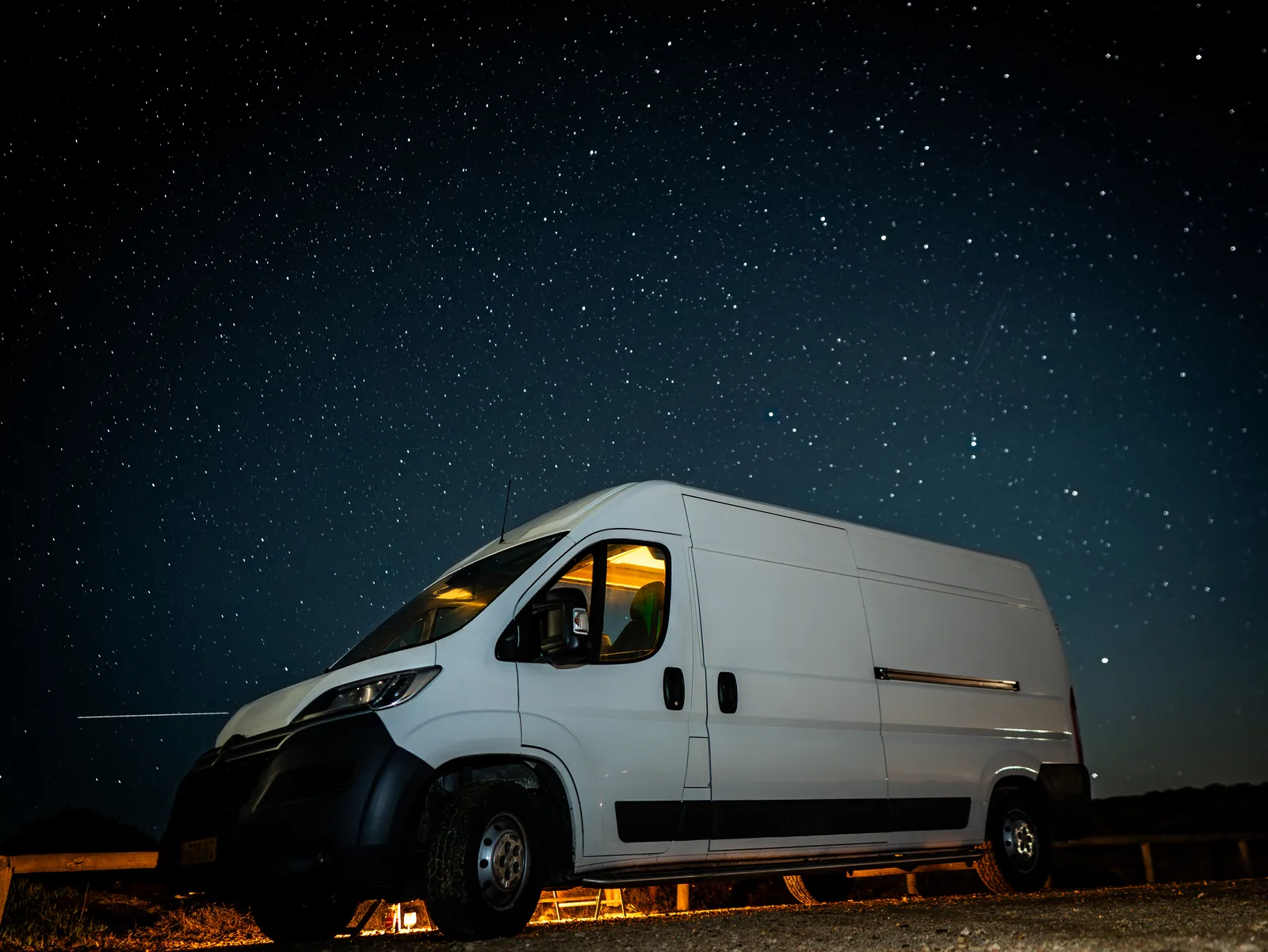
The Zonnewijzer under the stars

One of the most underrated advantages of a fully off-grid campervan: you can park anywhere it's dark. No campsite with irritating floodlights, no neighbour's generator. The best starry skies are found in precisely the places that are also ideal for wild camping — remote, quiet, and far from the city.

The Netherlands: Dark Sky Parks

The Netherlands has two official Dark Sky Parks. De Boschplaat on Terschelling is the darkest — one of the darkest spots in all of Western Europe. On the mainland, Lauwersmeer is the best choice: the national park has viewing platforms with reclining boards so you can lie flat and look up at the stars. On clear nights the Milky Way is visible with the naked eye.

Germany & Belgium: Eifel and High Fens

Less than 3 hours' drive from Amsterdam lies Eifel National Park, Germany's first official Dark Sky Park. The Belgian Eifel and the High Fens border it directly and benefit from the same dark-sky policy. Ideal for a weekend trip.

France: the Cévennes

The Parc National des Cévennes is the largest Dark Sky-certified area in Western Europe. So dark that not only the Milky Way but also the Andromeda galaxy is visible with the naked eye. A perfect destination for the longer road trip.

Calendar note On 12 August 2026 the first total solar eclipse in 27 years passes through northern Spain. A once-in-a-lifetime event for campervan travellers who can drive flexibly.

Read the full guide with all spots, campervan tips per location and practical advice: Stargazing from your campervan — complete guide →

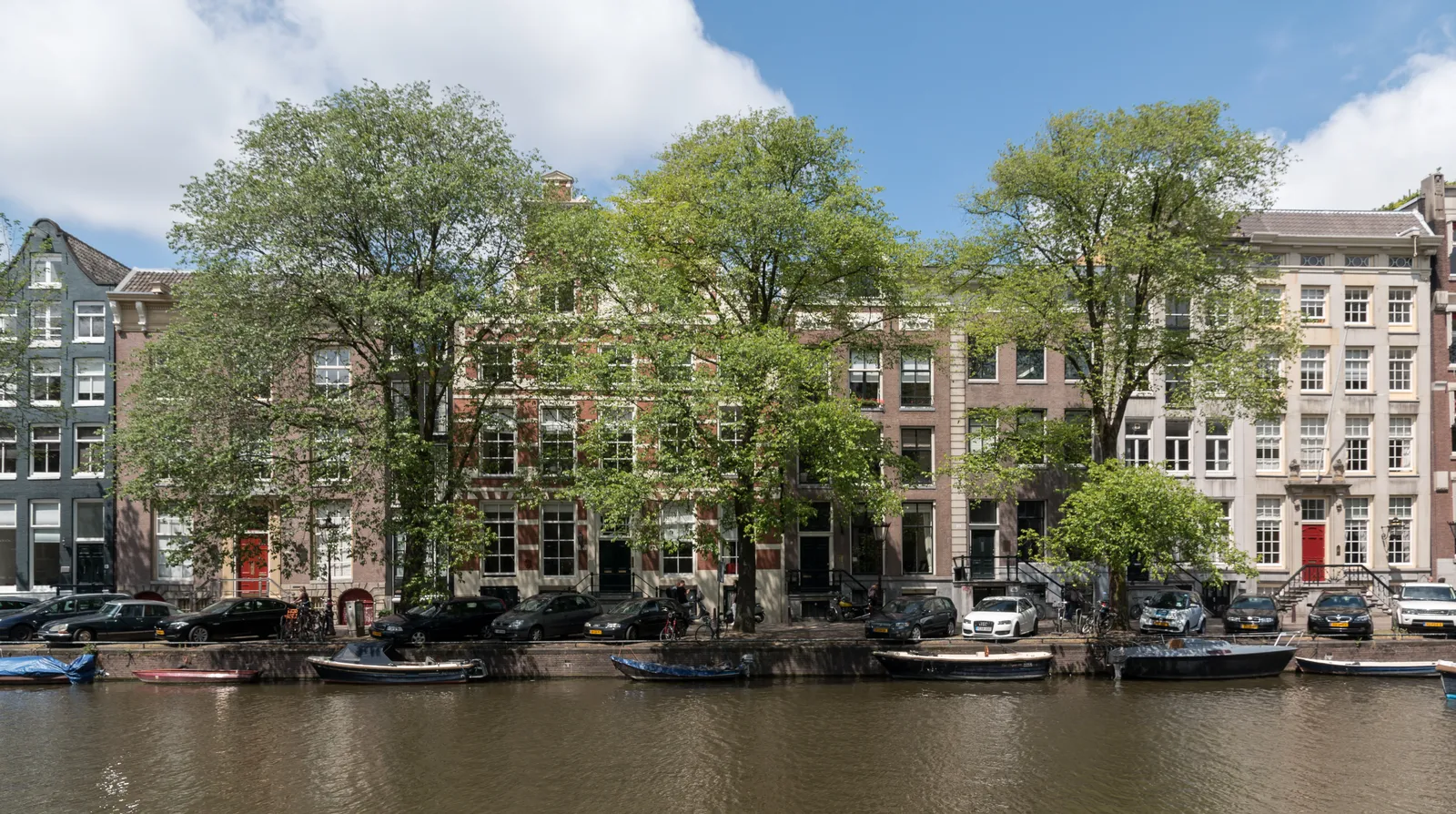
A decent hotel in Amsterdam quickly costs €150 to €250 per night — excluding parking, excluding breakfast, and with a narrow room of 18 m². A campervan gives you more space, your own kitchen, a proper bed and a vehicle. Do the maths.

Hotel versus campervan: the real numbers

A 3-star hotel in Amsterdam: €150–250/night, plus €30–50 parking, plus €18.44 tourist tax per person per night, plus 21% VAT on accommodation (new in 2026). An Adelaar campervan: €109–149/night all included, with Camping Zeeburg 3 km from the centre at ~€44/night.

Everything on board, nothing extra

Your own kitchen (hob, oven, fridge), queensize bed always made up, 220V power via lithium battery and solar panels, hot water, Nespresso, outdoor lounge set. Breakfast without a surcharge. Check-in on your own time. Pet? In the Horizon on request.

Amsterdam as a base

Zaanse Schans 20 min, Volendam 25 min, Keukenhof 35 min, Zandvoort 40 min. Camping Zeeburg is 3 km from Centraal Station — 7 minutes by tram 26. No rental car, no fixed hotel. You decide where you're parked tomorrow.

Full comparison, all campsites around Amsterdam and a complete equipment checklist: Campervan versus hotel in Amsterdam — full guide →

Free camping with a campervan is one of the best things there is — but you need to know where you're allowed to park. These apps help you find the perfect spot, from a deserted farm in the Dordogne to a lake in Sweden.

One of the greatest advantages of a fully off-grid campervan is that you don't depend on anything. No campsite needed, no hook-up, no rules about when the barrier closes. But wild camping in most European countries is subject to rules — and those rules differ per country, per region, sometimes even per municipality.

Fortunately there are apps that make this much easier. Below you'll find the apps we recommend to everyone heading out in an Adelaar Campers van.

The apps at a glance

Park4Night Freemium

The standard for wild camping in Europe

Park4Night is the best-known and most comprehensive app for campervan spots in Europe, with over 300,000 locations worldwide. The strength lies in the community: all spots are added and reviewed by real travellers, with photos, GPS coordinates and recent reviews. You'll find everything from official campervan pitches to hidden spots in nature. Essential for any campervan holiday.

Tip: Filter on "wild camping" or "free camping" to find spots at no cost. Always check the most recent reviews — rules can change.
iOS Android Free basic version
Campspace Dutch Paid per night

Camping with private landowners, small and special

Campspace connects campervan travellers with private individuals who offer a piece of land, garden or meadow as an overnight spot. Think an apple orchard in the Achterhoek, a farm in the Ardennes or a hillside with views in the Dordogne. The spots are small-scale and often unique — very different from a standard campsite. Strong in the Netherlands, Belgium and France, and growing across the rest of Europe.

Tip: Ideal for those who want the feel of wild camping without the legal grey area. You pay a small fee to the landowner, but it's worth it.
iOS Android Website
France Passion Annual guide

Overnight stays with French farmers, wine growers and artisans

France Passion is a unique concept: for an annual fee (around €30 for the guide and app) you gain access to over 3,000 overnight spots at French producers. Wine growers, cheese makers, lavender farmers, fruit growers. You stay overnight on their land for free, in exchange for a visit to their business and possibly a purchase. This is campervan travel as it was meant to be — local, authentic and unforgettable.

Tip: France only, but within that absolutely essential. Order the guide before you leave or download the app — you'll need an activation code.
iOS Android France only
CamperContact Freemium NKC

When you want a proper campsite, this is the best choice

CamperContact is the app of the Dutch Campervan Club (NKC) and contains information on campsites, campervan pitches and service points in 39 European countries. With extensive filters on price, facilities and ratings, you quickly find the right spot. Not every night do you want to wild camp — sometimes you just want to shower, fill up with water or empty the grey water tank. Then CamperContact is your best friend.

Tip: NKC members use the app for free. Non-members pay a small annual contribution for full access, including offline maps.
iOS Android 39 countries
iOverlander Freemium

For the true adventurer who ventures well off the beaten track

iOverlander was developed by and for overlanders — travellers who are on the road for a long time and seek genuinely remote spots. The app contains not only camping spots, but also water points, dump stations, workshops and border crossings. Strong in areas where Park4Night has fewer locations: Eastern Europe, Morocco, Scandinavia. The community is international and very active.

Tip: Use iOverlander as a supplement to Park4Night, not a replacement. Strong for Scandinavian adventure — precisely the region where the Horizon and Albatros are in their element.
iOS Android Worldwide
Landvergnügen Annual guide

The French France Passion concept, but for Germany

Landvergnügen is the German equivalent of France Passion: you buy an annual guide or app subscription and gain access to thousands of overnight spots at farmers, wine makers and other producers in Germany. Free overnight stays on a farm in the Eifel, beside a lake in Bavaria or in the middle of the Black Forest. Nearly 4,000 spots, largely free of charge.

Tip: Combine Landvergnügen with Park4Night for maximum flexibility in Germany. The guide is also available as a book at better bookshops.
iOS Android Germany only
Windy Freemium

The most detailed weather data in the world

Windy is a professional weather app with detailed radar and satellite imagery, wind directions per altitude, hourly precipitation chances and multiple weather models side by side. Far more detailed than any standard weather app. If you want to know whether that mountain pass in the Alps will be driveable tomorrow, or exactly when that rain front will pass over the Pyrenees, Windy is indispensable.

Tip: Use the ECMWF model for the most reliable multi-day forecasts. The free version is already excellent for a campervan holiday.
iOS Android Free basic version
ACSI Camping €12.99/year

9,000 inspected campsites across Europe

ACSI is the most comprehensive campsite guide in Europe — all locations are physically inspected and rated. Useful for the days when you deliberately choose a full campsite: shower, fill up with water, empty the tank. ACSI is also known for early booking discounts and special ACSI rates outside peak season. With over 9,000 campsites in 40 countries, the coverage is exceptional.

Tip: The ACSI CampingCard gives discounts at participating campsites outside peak season — sometimes up to 50%. It pays for itself quickly on a longer trip.
iOS Android 40 countries

Also useful to have

Tankservice / TanQyou

Cheap fuel on the road. Gives discounts at smaller petrol stations and compares fuel prices nearby. Handy when you notice that diesel in the Netherlands is €0.30 more expensive than just across the border in Germany.

🌿

Green-Zones

Environmental zones in Europe are complex and change regularly. Green-Zones shows exactly which cities and areas have restricted access for older diesel engines, and what the rules are per zone.

📍

Polarsteps

Travel diary app that automatically tracks and shares your route. Useful to look back later at where you've been — and popular for sharing your trip with friends and family at home.

🗺️

Maps.me

Offline maps for all of Europe. When you're out of range (and that's precisely the point) Google Maps doesn't work. Maps.me works fully offline and can be downloaded free per country or region.

📍

What3words

Shares your exact location via three random words — accurate to a 3×3 metre square. Useful when you're in a remote spot and emergency services or someone else needs to find you without a clear address.

🚵

Komoot

Route planner for cyclists, walkers and mountain bikers. Once you've parked the campervan and want to explore the surroundings on the folding bike or on foot, Komoot plans the most beautiful routes including elevation profile and terrain type.

📐

Camper Leveler Pro

Uses your phone's gyroscope sensors to determine how much slope you're on. Shows precisely which side needs levelling boards or wedge blocks for a level bed. Small app, great convenience.

Our three campervans are fully off-grid — solar panels, boiler, water filter. See the Albatros, the Horizon or the Zonnewijzer.

May is the ideal month to explore the Netherlands by campervan. The weather is stable, the flowers are still blooming, and the summer crowds haven't arrived yet.

Read everything about May holiday destinations, where you can park and what you can do: May Holiday with a campervan — complete guide →