Travel tips

The best places
in Portugal

This autumn we are moving the Horizon to Portugal. From October through March it is based in Porto, and that is no accident: while northern Europe shuts down, this is exactly the season when Portugal is at its best. Six places we filmed ourselves, from the mountains in the north to a stone circle in the Alentejo that is older than Stonehenge.

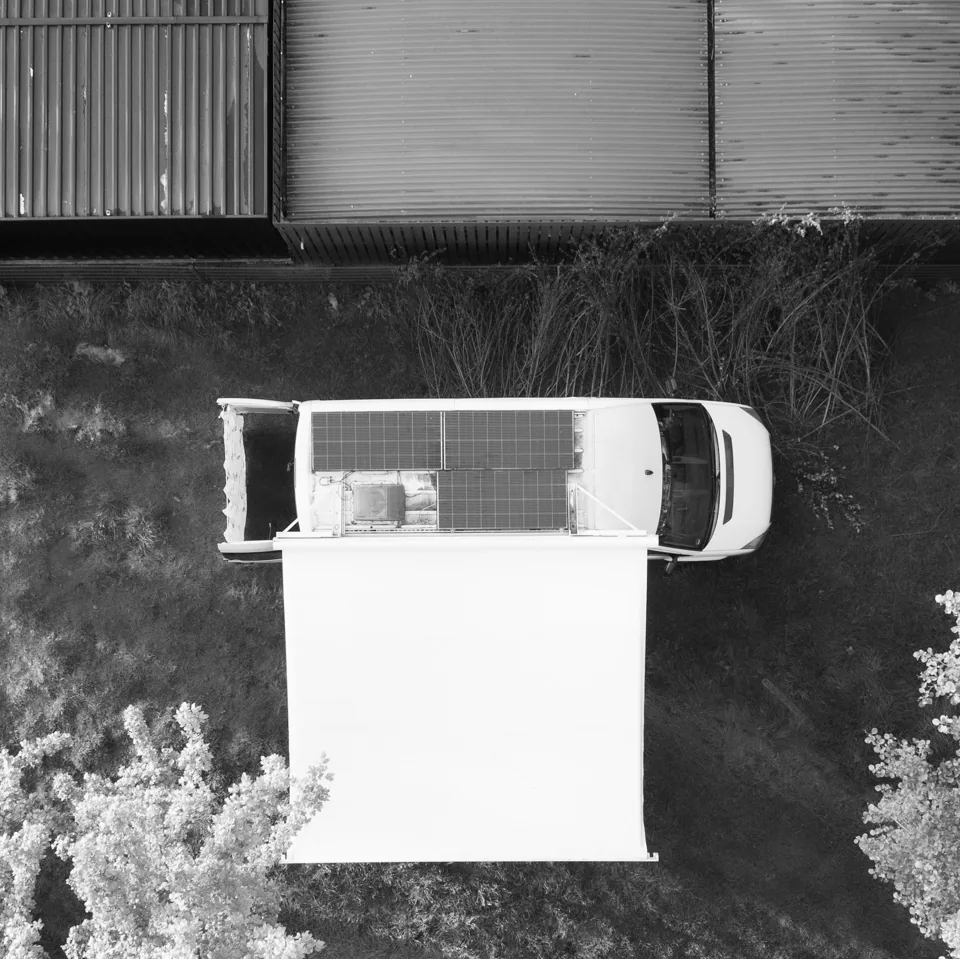
The Horizon campervan filmed from above with the drone

Adelaar Campers  ·  September 2026  ·  9 min read


Why Portugal The country where winter does not count

A campervan in the Netherlands mostly sits still from November to March. In Portugal it is the other way round. On the coast near Porto daytime temperatures usually sit around fifteen degrees, further south they are higher still, and the solar panels keep producing right through the winter. How far a day of sun gets you depends on what you use, but it is a world away from a northern winter, and topping up at a hook-up is always an option along the way.

On top of that it is low season. The coastal towns are quiet, campsites have space, the mountain roads are empty and nothing needs booking weeks ahead. Portugal is also small enough to drive from the northern mountains to the plains of the Alentejo in a fortnight without spending whole days on the motorway.
"Up north you wait for summer. In Portugal you simply drive to it in January."


1 · The starting point Porto and the Douro

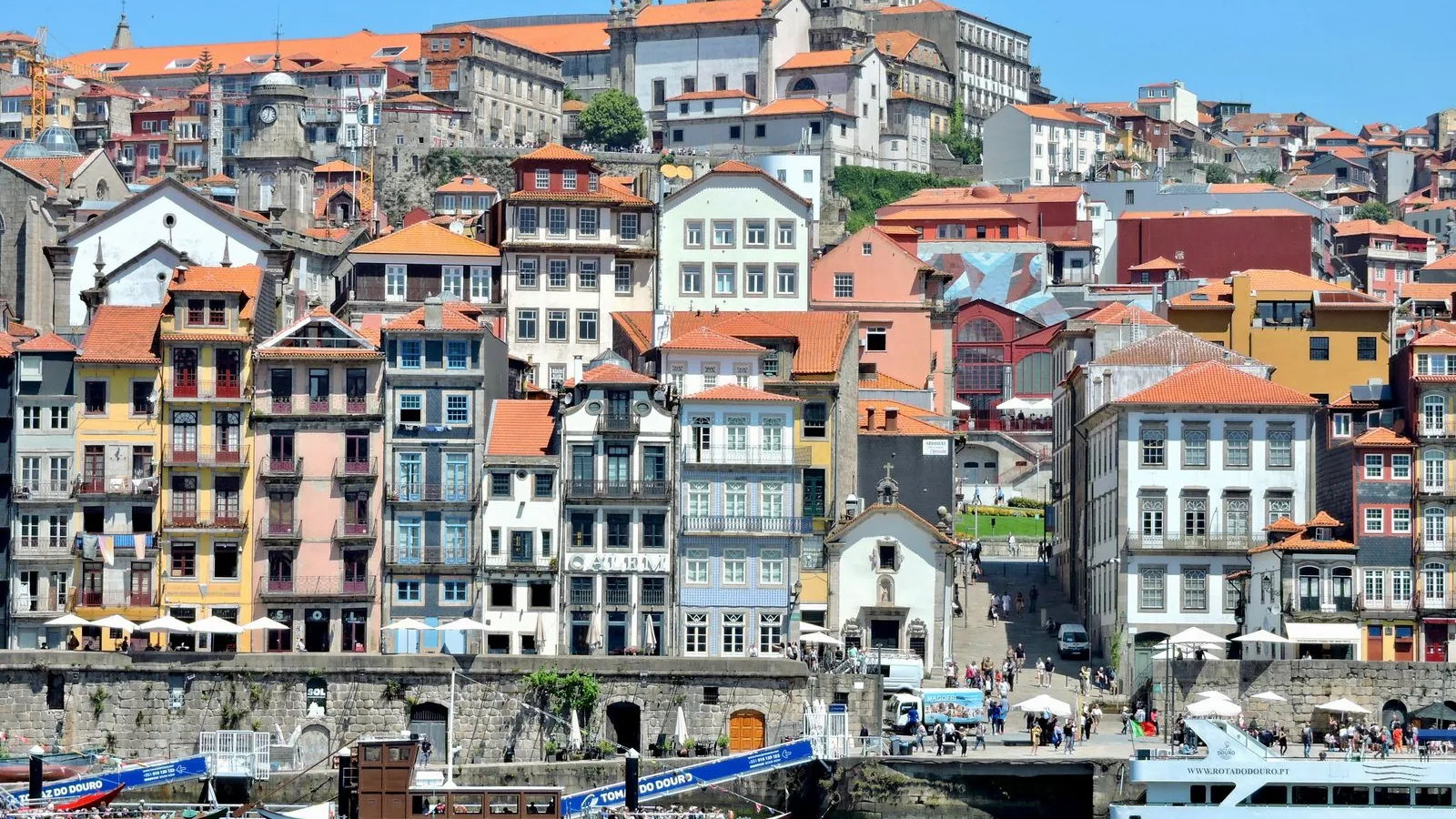
The Ribeira in Porto, colourful houses on the Douro with rabelo boats at the quay

The Ribeira, Porto's old harbour quarter on the Douro.

where you collect the Horizon · 2 to 3 days · 13 to 16 degrees by day in winter

Porto is where your trip begins, and it would be a shame to drive straight past it. The city sits on the steep northern bank of the Douro, with the Ribeira as its old harbour quarter at the bottom and the Ponte Dom Luis I striding across. On the far side, in Vila Nova de Gaia, are the port lodges where the barrels have stood in the same place for two centuries.

What makes Porto so good in winter is that it simply carries on. Not an emptied-out seaside resort but a working city, with markets, tascas and air that smells of the Atlantic. Give it two days before you pick up the van, or come back at the end of your trip.

Then drive the Douro inland. From Peso da Regua and Pinhao the vineyard terraces climb the hillsides like staircases, and the N222 along the river is known as one of the finest roads in Europe. Ninety minutes from the city and you are there.


2 · Mountains and waterfalls Peneda-Gerês

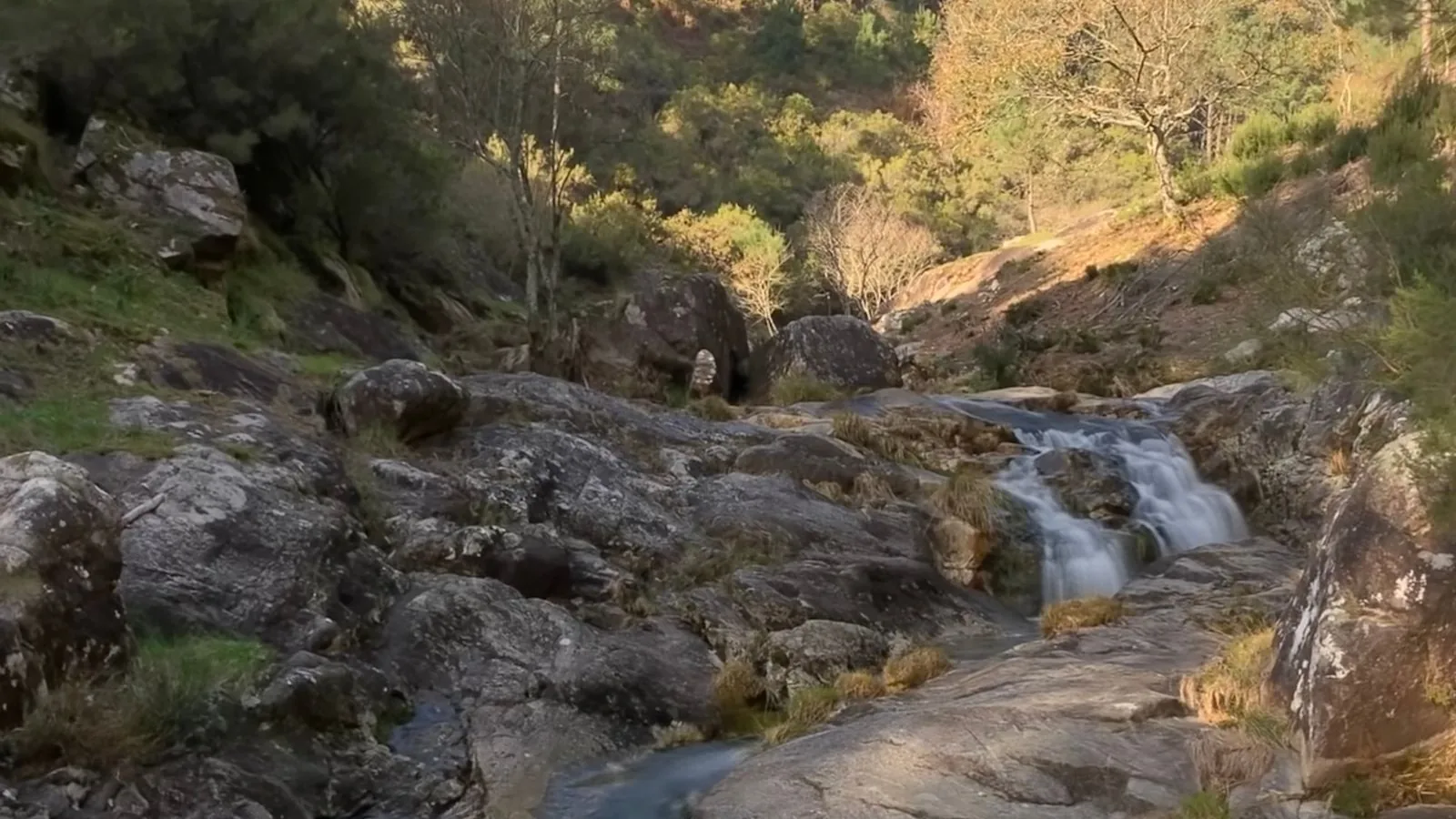
A river cascade between granite rocks in Peneda-Geres National Park

A river cascade in Peneda-Geres, Portugal's only national park.

around 110 km from Porto · 2 to 4 days · mountain climate, cold at night

Two hours north-east of Porto lies Portugal's only national park. Peneda-Geres was created in 1971, covers almost 700 square kilometres and is a chain of granite ridges, river valleys and villages that in places are still built entirely of stone. The highest point is just over 1,500 metres.

What you see here you get nowhere else in Portugal: the espigueiros, granite grain stores on stilts that look like little tombs, the half-drowned remains of Vilarinho das Furnas that reappear when the water is low, and the garranos, small semi-wild horses that simply walk down the road. The Iberian wolf is still here too, though you will not see one.

Expect rain. The park gets between 1,600 and 3,200 millimetres a year and more than 130 rainy days. That is exactly why the rivers and waterfalls are so impressive here, and exactly why a van with a proper heater is no luxury.

Watch the vlog The Rivers & Ruins of Gerês: Portugal's Secret Beauty Koen filmed the rivers, the ruins and the places to sleep in the park. Watch on YouTube →

3 · The abandoned village Drave

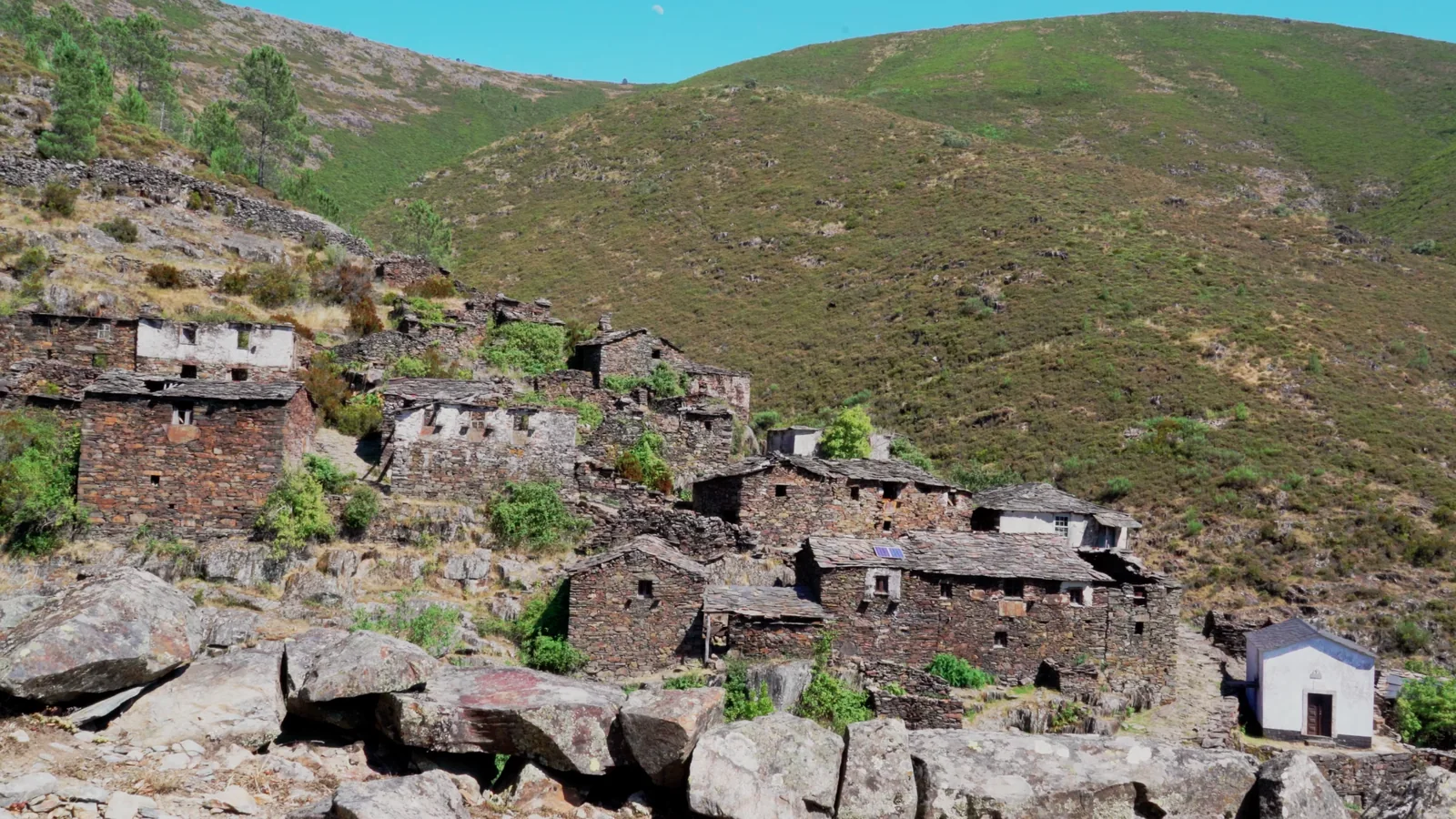
The abandoned village of Drave, schist houses and the chapel against the hillside

Drave, abandoned but not derelict. On the right the chapel of Nossa Senhora da Saude.

around 70 km from Porto · 1 day · last stretch on foot

In the municipality of Arouca, in a valley between the Serra da Freita, the Serra de Sao Macario and the Serra da Arada, sits a village everyone has left. Drave is a handful of houses of lousinha stone with slate roofs, a small chapel dedicated to Nossa Senhora da Saude, and nothing else. No electricity, no shop, no residents.

The remarkable thing is that it does not look derelict. The village is maintained by volunteers and scout groups, so you walk through a place that still looks as it was, only without people. In winter, with mist hanging between the mountains, it is completely silent.

The last stretch is not for the van. The classic route is the PR14 ARC, about 7.7 kilometres and close to three hours on foot. There are unpaved forest tracks towards the village, but they are no place for three tonnes of campervan. Park higher up and walk the last part.

Watch the vlog The Magical Village of Drave: Portugal's Lost Wonder The walk up to the village and what it looks like inside. Watch on YouTube →

4 · The biggest waves on earth Nazaré

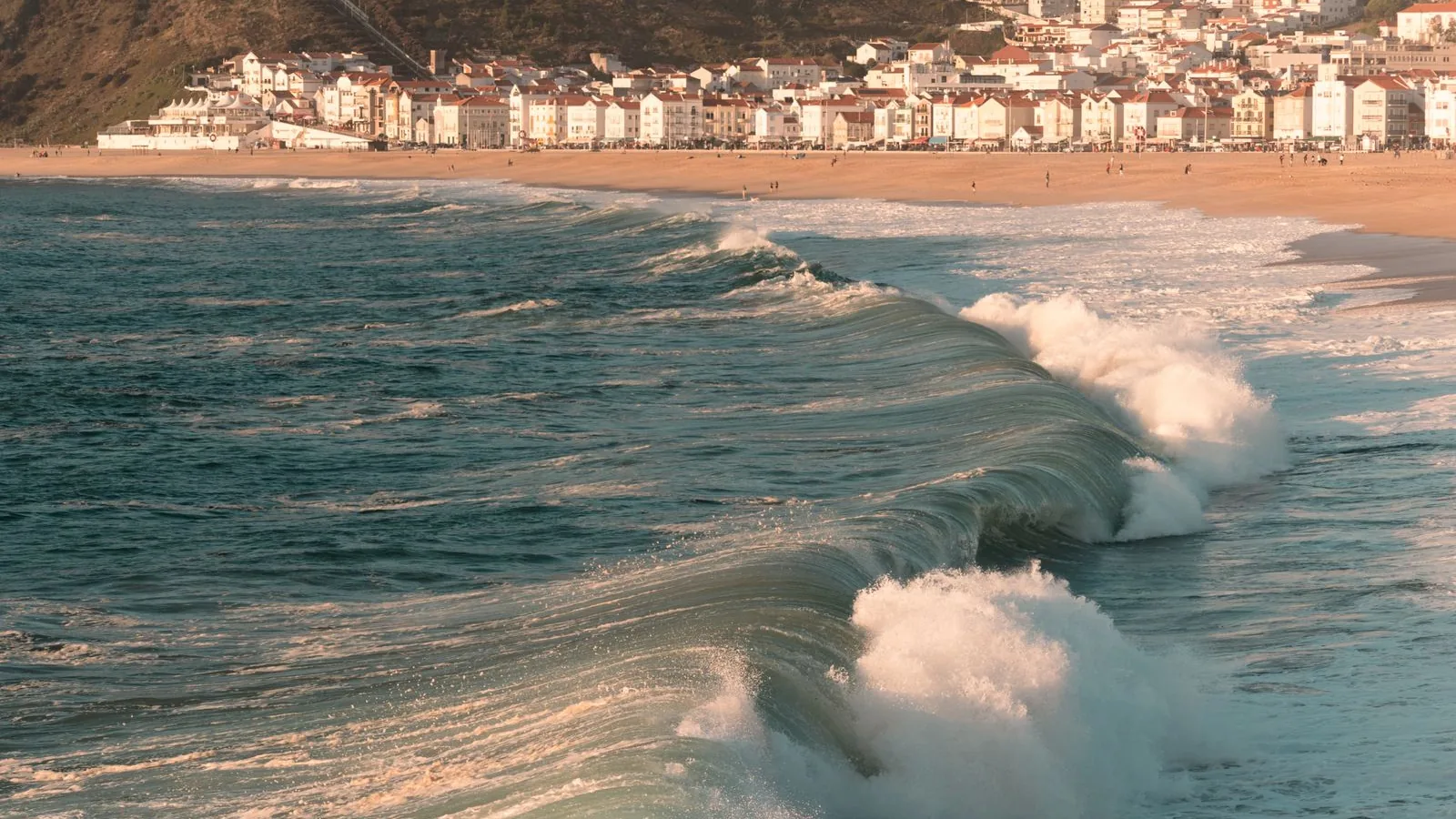
Atlantic waves breaking off the coast of Nazare with the town behind

The Atlantic swell at Nazare, with the town below the cliff.

around 250 km from Porto · 1 to 2 days · the big swell comes in winter

Off the coast of Nazare lies the Nazare Canyon, an underwater gorge that funnels the swell and drives the waves at Praia do Norte to extraordinary heights. The results are in the Guinness Book: Garrett McNamara rode a 23.8-metre wave here in 2011, Rodrigo Koxa went one better at 24.4 metres in 2017, Maya Gabeira set the women's record at 22.4 metres in 2020, and Sebastian Steudtner reached 26.2 metres that same year.

Which is exactly why this is a winter destination. The big swell arrives in the dark months, and when it does the whole clifftop fills with people looking down. The viewpoint at the Forte de Sao Miguel Arcanjo, with its red lighthouse, is the spot.

The town itself has three parts: Praia down by the beach, Sitio up on the cliff and Pederneira on the hill. A funicular runs between Praia and Sitio, which is handy because the road up is steep.

Watch the vlog The Big Wave Surfers of Nazaré – GIANT WAVES! (4K drone footage) Drone footage of the giant waves and the surfers riding them. Watch on YouTube →

5 · Surf and fishing town Ericeira

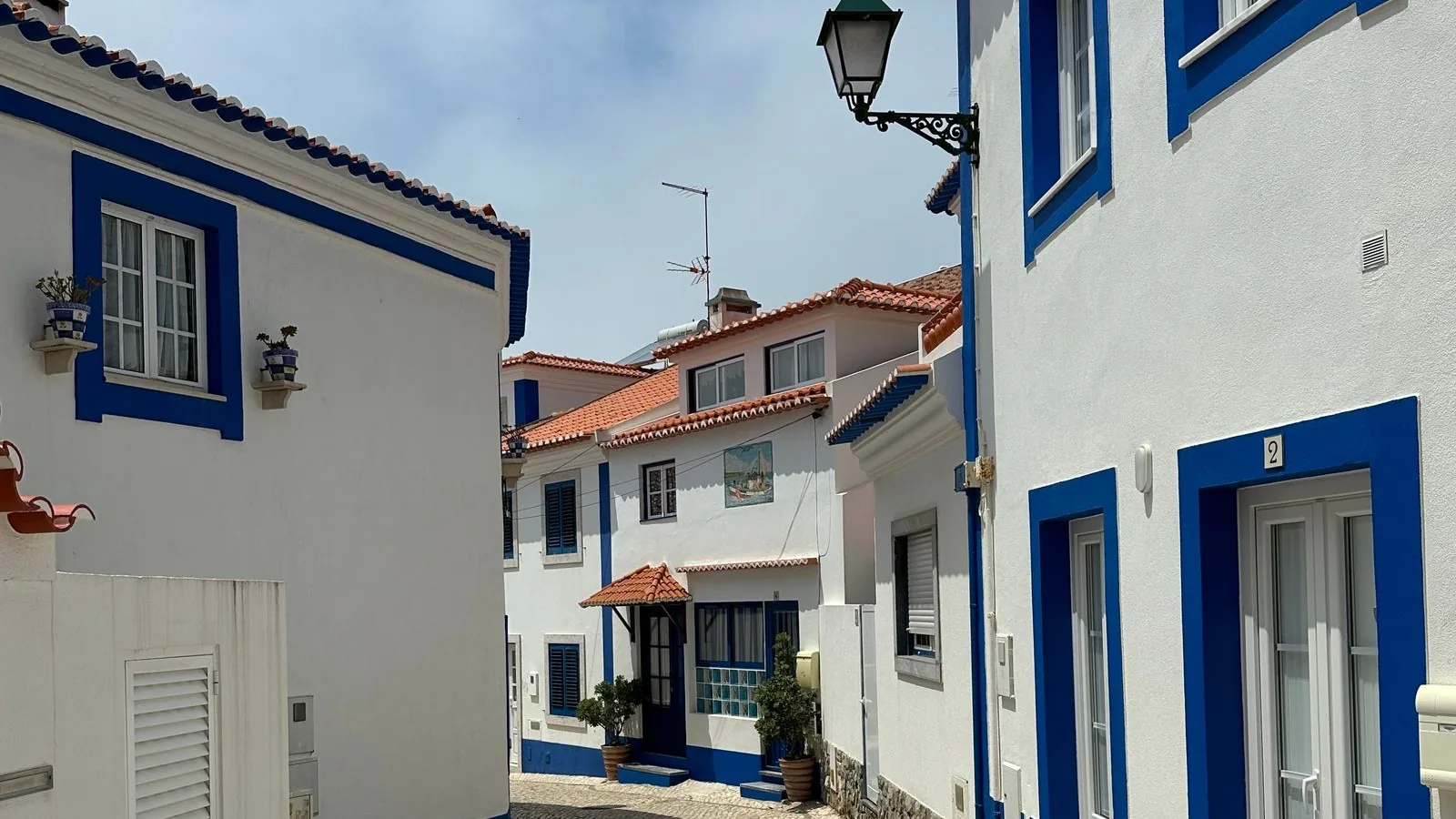
Whitewashed houses with blue trim in a street in Ericeira

The white and blue streets of Ericeira.

around 320 km from Porto · 2 to 3 days · 35 km north-west of Lisbon

Ericeira is one of only a couple of places in Europe with World Surfing Reserve status, and you notice it immediately. Within a few kilometres of coast the breaks line up one after another, from beginner beaches to Ribeira d'Ilhas and Coxos, where it gets serious. The town itself is an old fishing village, whitewashed and clinging to a cliff.

It is also where the travelling crowd gathers. Surfers, digital nomads and campervans, all year round, January included. That gives it a pleasant looseness: cafes that are open, bread ready early and people who know which break works on which wind.

From Ericeira you are half an hour from Sintra, with its palaces in the mist and Cabo da Roca as the westernmost point of mainland Europe. A good day out if you want to leave the van standing.


6 · Older than Stonehenge Cromeleque dos Almendres

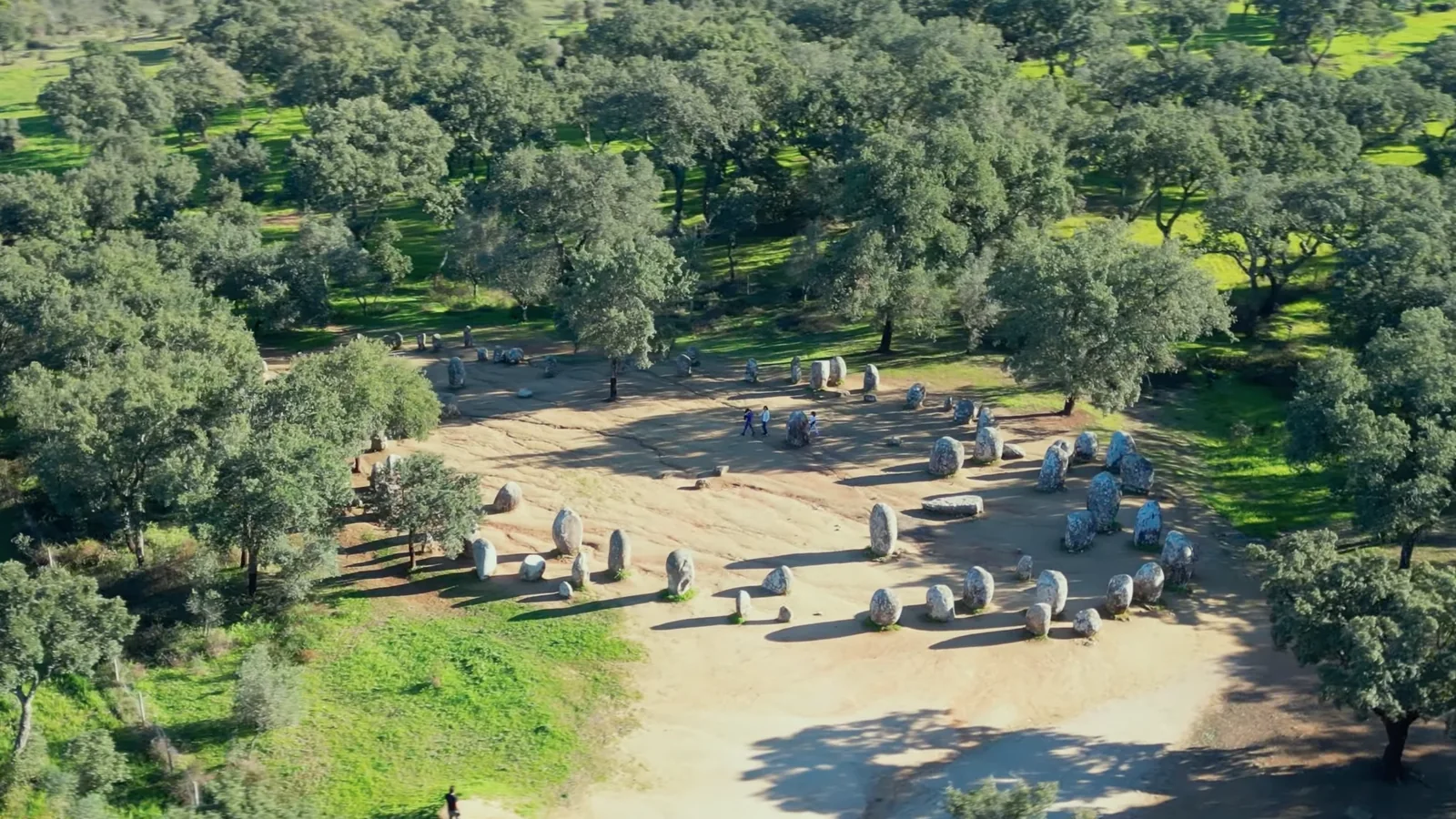
The Cromeleque dos Almendres from above, the oval of standing stones among the cork oaks

The Cromeleque dos Almendres, an oval of some 95 stones among the cork oaks near Evora.

around 430 km from Porto · 1 to 2 days · Alentejo, near Evora

On a hill among the cork oaks, some fifteen kilometres west of Evora, about 95 granite stones stand in an oval. The oldest groups were raised around 6000 BC, the youngest around 4000 BC. For comparison: Stonehenge came some four thousand years later. Ninety-two of the stones form two fields aligned with the equinoxes, and around a dozen carry carved lines and circles.

This is not a museum display. There is no fence, no ticket office and usually no one there. You drive an unpaved track through the cork oaks, park, and stand among them. In winter the mist often hangs between the trees in the morning, which makes it far more striking than a sunny afternoon in July.

The Alentejo around it is the emptiest part of Portugal: rolling plains, cork oaks, whitewashed villages, and Evora itself as a walled city with a Roman temple on its square. If you are driving from Porto down to the Algarve, this is the obvious stop.

Watch the vlog The Mythical Stone Circle of Portugal – Cromeleque dos Almendres The story behind the stones and how to get there. Watch on YouTube →

More places Our map of Portugal

These are six places, but the list is longer. Over the course of our trips we kept a map of places to sleep, viewpoints, water points and the spots where it is worth staying an extra day.

Open the map Our places in Portugal on Google Maps Places to sleep, viewpoints and detours worth taking. Open in Google Maps →

Vanlife in Portugal What to know before you go

Portugal is one of the best campervan countries in Europe. Here is the practical side, so you set off well prepared.


Which van The Horizon is in Porto

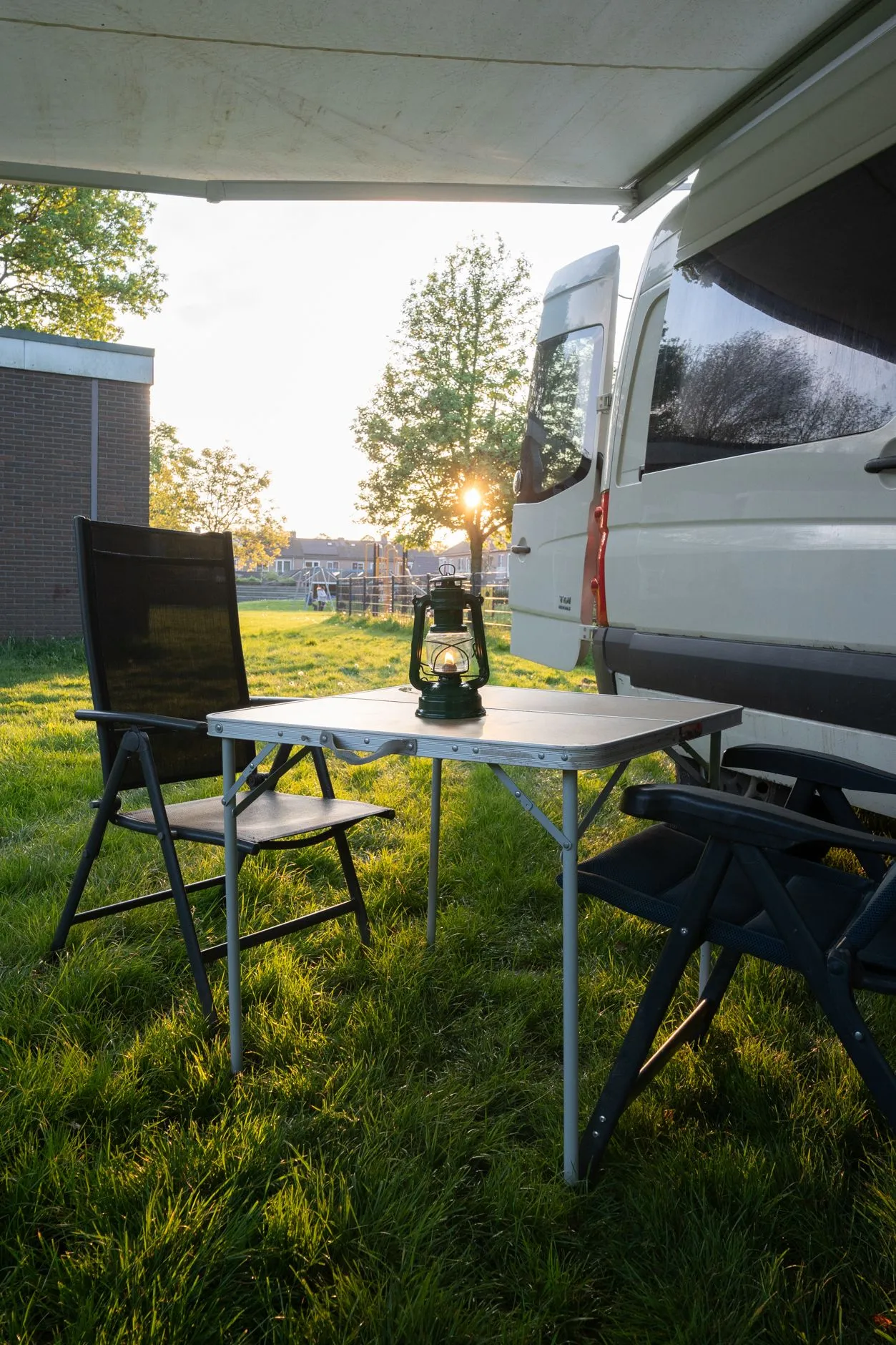
The Horizon with its awning out, table and chairs underneath

The Horizon, available from Porto between October and March.

For this trip you do not need three days of driving through France and Spain first. From October through March the Horizon is based in Porto, with pick-up at the airport or in the city. You fly in, get the handover and drive away.

The Horizon is a self-built VW Crafter with a kingsize bed of 175 by 210 centimetres, a gas hob with an electric oven, a hot outdoor shower, 600W of solar panels feeding a 3.65 kWh battery, an electrically extending awning and a Webasto diesel heater. Solar lets you park where it is beautiful rather than where the socket is, and in Portugal the panels keep producing through the winter. How long you last depends on what you use; a night on a hook-up at a campsite or motorhome area brings everything back up.

All the details and conditions are on the page about campervan rental in Porto. From April through September the Horizon is back in the Netherlands, with pick-up in Amstelveen or Hoogeveen.

Portugal this winter?

The Horizon is based in Porto from October through March, from €129 per night. Pick up at the airport or in the city. Send us your dates and we will check straight away.

Campervan rental in Porto See the Horizon

Videos. The vlogs in this article are from our own channel Ocean Roadies and were filmed on location. Photos. The pictures of Drave and the Cromeleque dos Almendres are our own, taken on the trip. The other destination photos come from Pexels and are free to use under the Pexels License. Sources. Facts on Peneda-Gerês, Nazaré and the Cromeleque dos Almendres were checked against Wikipedia; the overnighting rules against Portuguese road operators.